Improved Targeting …
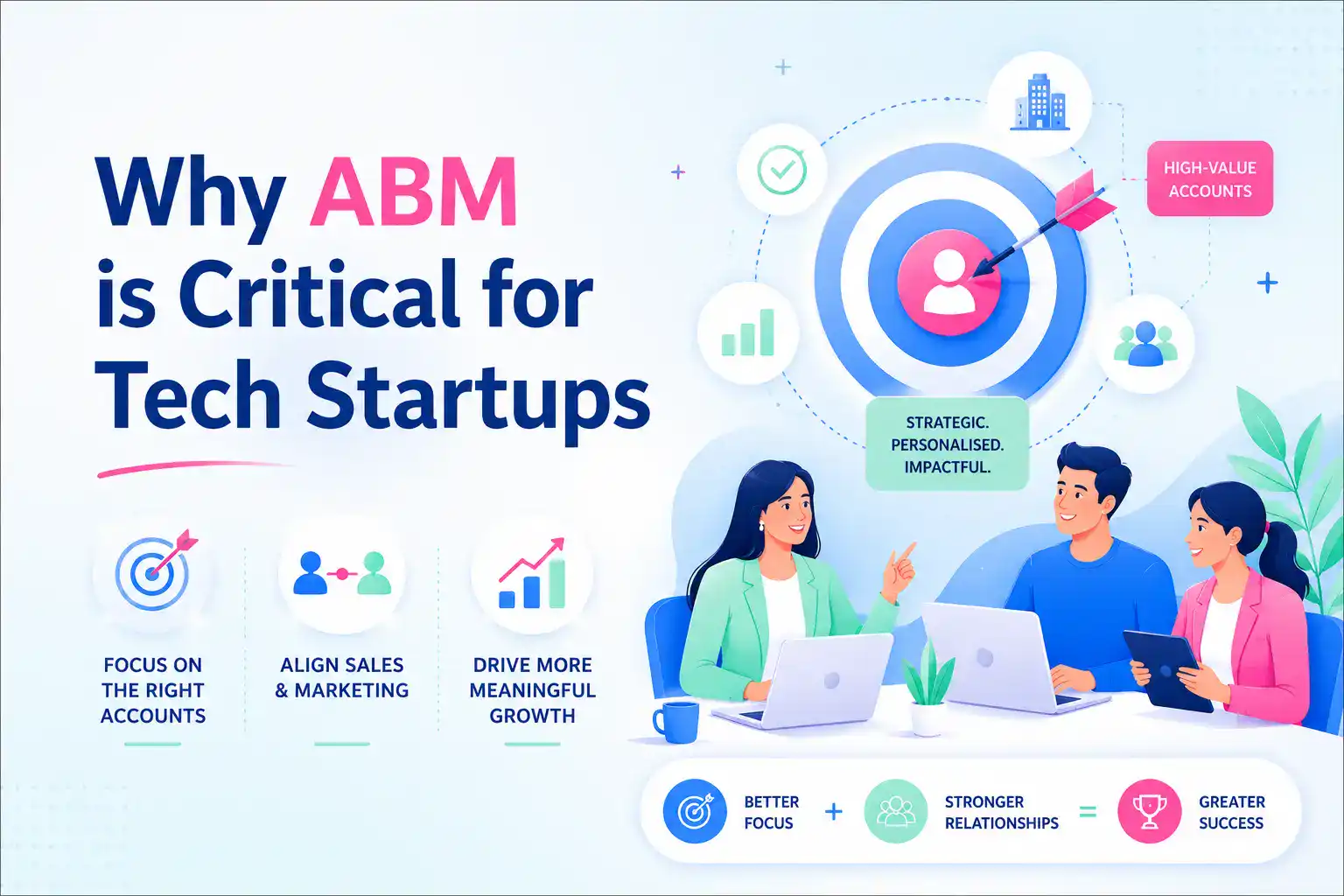
Account Based Marketing (ABM) has firmly established itself as a crucial strategy for B2B tech companies and startups looking to maximise their sales and marketing efforts. By focusing on targeted, high-value accounts, ABM helps tech firms better understand their prospects and target them more effectively. In this way, it aims to equip marketing and sales teams with timely information to help create and deliver personalised and relevant outreach activity to create new business sales opportunities. Emerging technologies such as AI and predictive analytics are helping to reshape ABM, making it more efficient and effective than ever before. It’s worth exploring best practices for implementing ABM, as well as the types of conditions where it works best.
The Evolution of ABM
ABM has evolved significantly from its traditional roots of treating individual accounts as markets of one. Initially, it was a manual, time-intensive process that involved extensive research and personalised content creation for each target company. Many of the founding principles come from best practices in enterprise sales, and ABM was established to formalise this sales methodology with processes, systems and teams to support it. I’m conflicted that the word ‘marketing’ appears in the name, because ABM is a cross-functional activity that would be better served without any departmental bias. It would be more appropriate, and more easily adopted by sales teams, for example, if it were called something like: Account Based Intelligence.
Collaboration Across Teams
For ABM to work requires very close alignment between both marketing and sales, with much of the research and information coming from the marketing team to enable salespeople to execute more effective outreach activity. However, it also requires the salesperson, who is responsible for developing customer relationships, to act and update account information with their own research. This is why ABM is not purely a marketing activity, and it goes beyond simple sales enablement. Close collaboration and the bi-directional flow of information between both teams is essential to facilitate more timely and effective sales practices.
Account Based Intelligence
The rise of AI and predictive analytics has helped transform ABM into a more scalable and data-driven activity. AI plays a pivotal role because it enables marketers to analyse vast amounts of data quickly, identify patterns and predict which accounts are most likely to convert. This allows tech startups to focus their limited resources on the accounts with the highest potential return on investment (ROI). Predictive analytics further enhances this by helping marketing and sales teams understand the behaviours and needs of their target accounts, allowing for more precise targeting and personalisation.
Integration Powerups
Emerging technologies are also making it easier to integrate ABM with other marketing strategies, such as inbound marketing. This hybrid approach, sometimes referred to as ABM 2.0, takes the strengths of both methods, targeting specific high-value accounts while also attracting a broader audience through content marketing and SEO.
How ABM Works
ABM works by treating the largest individual accounts as their own markets. Rather than casting a wide net, ABM focuses on a select group of high-value targets and tailors marketing and sales efforts specifically to their needs. This approach is particularly effective in B2B tech, where deal sizes can be large, sales cycles are often long and purchasing decisions are made by multiple stakeholders in buying teams. In the context of sales methodology, ABM enables best practices by providing a framework for personalised, account-specific outreach at the most appropriate time.
More Than Sales Enablement
Sales teams can use the insights gathered through ABM to craft messaging that resonates with each target account’s unique challenges and goals. Sales outreach can be triggered at the most significant time when the prospect company has a high propensity to buy. This targeted approach increases the likelihood of sales conversion and can shorten the sales cycle by addressing the specific concerns of each decision maker involved in the purchasing process.
When You Should Use ABM
ABM is not a one-size-fits-all solution, so it’s important to know when it’s the most effective strategy. It takes effort and commitment to put into place and continuously maintain, but once established, and given some time, the results will start to shine through.
ABM Works Best in the Following Scenarios:
- High Value Deals: With its roots in enterprise sales, ABM is ideal for tech companies and startups targeting a small number of large companies or high-value accounts, where the potential ROI justifies the time and resources invested in personalised outreach.
- Complex Sales Cycles: In industries like B2B tech, where sales cycles can be long and complex, involving multiple stakeholders, ABM can help navigate the decision-making process by providing tailored content and messaging for each stakeholder.
- Niche Markets: For tech startups operating in niche markets, which is increasingly the case, ABM allows for highly targeted campaigns that focus on a small number of accounts that are a perfect fit for their solution.
The Future of ABM in B2B Tech
As ABM continues to evolve, we can expect even greater integration of AI and machine learning to drive more sophisticated targeting and personalisation. Predictive analytics will become increasingly accurate, enabling marketers to anticipate the needs of their target accounts and deliver proactive solutions. No doubt, the lines between ABM and other marketing strategies will continue to blur. The future of ABM lies in its ability to seamlessly integrate with inbound marketing, content marketing and even social selling, creating a holistic approach that maximises engagement across multiple channels.
ABM is a modern go-to-market strategy that cannot be ignored and, in the right scenario, can be the difference between success and falling short. It’s a powerful methodology that can help your tech firm through early growth and scaleup stages. The name still bothers me, but there is no disputing the benefits when you get marketing and sales teams to collaborate closely in the execution.

You may want to read: “How to Define Your Target Market.”