
Data Awareness for Tech Startups…
Apparently, data is the new oil, gold, water, currency, air, electricity (insert your preferred metaphor here). Ok, so data is fundamentally important, we get it, and as with all valuable commodities, there are rules about how it’s mined, stored and traded. A serious consideration for any B2B tech company looking to do business globally is data sovereignty. Regulations around data privacy, like the General Data Protection Regulation (GDPR), have impacted how we do business forever. Tech companies must navigate a minefield of legalities while still trying to get their marketing message out there. So, how can you approach marketing in different data jurisdictions? Here are some strategies for compliance and building trust with global audiences.
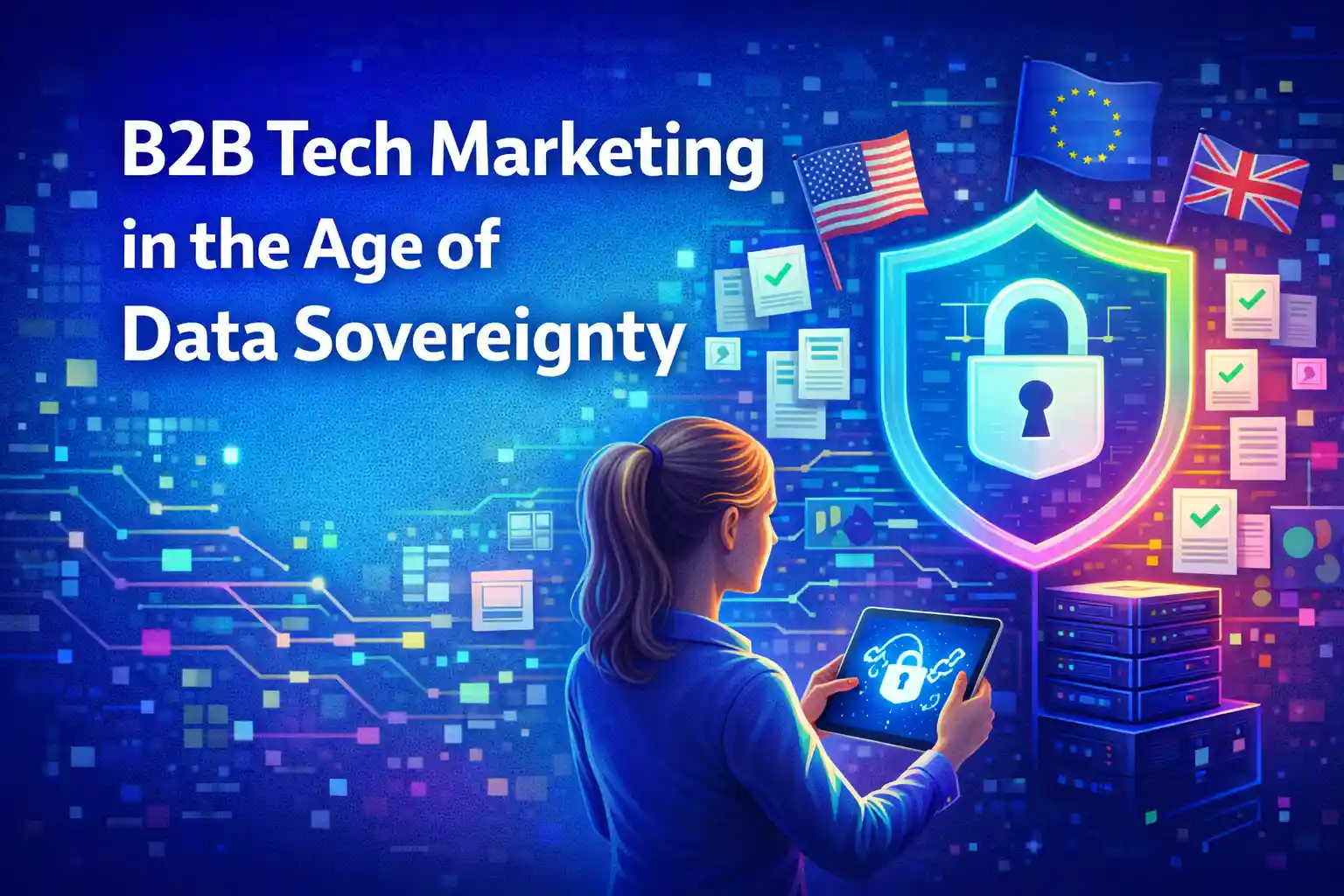
The Global Patchwork of Data Regulations
Understanding the complex web of data regulations across different regions is a primary priority. With GDPR in Europe, the California Consumer Privacy Act (CCPA) in California and numerous other local regulations popping up, it requires everyone’s attention. Each country, or even state, might have its own set of rules regarding how data can be collected, processed and stored. For B2B tech startups, this means that a one-size-fits-all data strategy just won’t cut it.
Key Considerations for B2B Tech Companies:
- GDPR: If you’re marketing to EU customers, GDPR is your Bible. For B2B tech companies, it mandates that you obtain explicit consent or apply the basis of “legitimate interest” before collecting and processing personal data for use in direct marketing. Additionally, you must offer a clear and easy way for recipients to opt out of future marketing messages, and this must be respected immediately.
- CCPA: Like GDPR, but with a California twist, CCPA focuses on giving consumers the right to know what personal data is being collected and the right to say “no” to the sale of their data.
- APAC regulations: In Asia-Pacific countries, like Australia and Singapore, they have their own data protection laws, which means you’ll need to tailor your approach depending on where you’re targeting.
So, what’s a tech startup to do? First, stop assuming everyone wants to receive your newsletter just because they visited your website once. Second, understand that navigating these regulations requires more than just slapping a generic privacy policy on your website. You need to know the nuances of each region and adapt your marketing tactics accordingly.
Build Trust Through Transparency
Data sovereignty isn’t just about avoiding fines and legal troubles, although that’s part of it; it’s also about building trust with your audience. Customers, especially in the B2B space, want to know that their data is in safe hands. If they suspect that your startup is playing fast and loose with their information, they’ll take their business elsewhere faster than you can say “conversion rate.”
Transparency is Key
Be upfront about what data you’re collecting, why you’re collecting it and how you plan to use it. This is where your marketing team needs to shine. Crafting clear, honest messaging about data privacy can set you apart from competitors who treat compliance as an afterthought. Make sure your privacy policies are easy to find and understand, not buried in fine print or written in legalese.
5 Strategies for Compliant Marketing
Now that you understand the landscape, let’s talk about strategy. How can B2B tech companies market effectively while staying on the right side of the law?
1. Localised Marketing Campaigns
Tailor your marketing campaigns to meet the specific data privacy laws of each country or region. For example, if you’re targeting the EU, make sure your lead generation forms include GDPR-compliant consent checkboxes. If you’re going after the Californian market, provide clear options for consumers to opt out of data collection.
2. Data Minimisation
Less can definitely mean more in this instance by collecting only the data you absolutely need. Not only does this approach make compliance easier, but it also demonstrates respect for your audience’s privacy. B2B prospects are more likely to complete a short, simple online form, and you can always append more detailed company information using data enrichment methods and tools later. This helps engage prospects by removing barriers, while giving your sales team the market intelligence they need.
3. Consent Management
Use consent management platforms to track and manage user consent across different regions – most CRM tools will have this feature embedded. This ensures that you’re not only compliant but also able to quickly adapt to any changes in the law.
4. Regular Audits
Conduct regular data audits to ensure compliance with local and regional laws. This isn’t just about avoiding compliance issues or risk of financial penalties; this is what best practice looks like and helps build and maintain trust with customers. An audit might not sound sexy, but it need not be painful either if done as a regular quarterly activity, with standard checks and processes.
5. Education and Training
Make sure your marketing and sales teams are up to speed on the latest data privacy regulations. This isn’t a “set it and forget it” situation because laws change and so must your strategies.
The Role of Technology
Technology is both your greatest ally and your biggest challenge. Tools like customer data platforms (CDPs) can help you manage and segment your data in compliance with regional laws. Meanwhile, marketing automation platforms can ensure that your campaigns are properly localised and that consent and unsubscribe options are appropriately managed. Like any tool, these software solutions are only there to help, so you need a team that understands how to use them effectively.
Promote Trust Through Compliance
Understanding data sovereignty is a multifaceted activity and the stakes can be high, meaning it’s not something you can afford to get wrong. It has become a fundamental part of building a successful, sustainable business. Marketing in the age of data sovereignty requires a combination of legal savvy and strategic thinking. By staying compliant, building trust and leveraging the right tools and strategies, B2B tech startups can find their way and avoid the pitfalls.
You may want to read: “How to Define Your Target Market.”