What It Means for B2B Tech Startups…
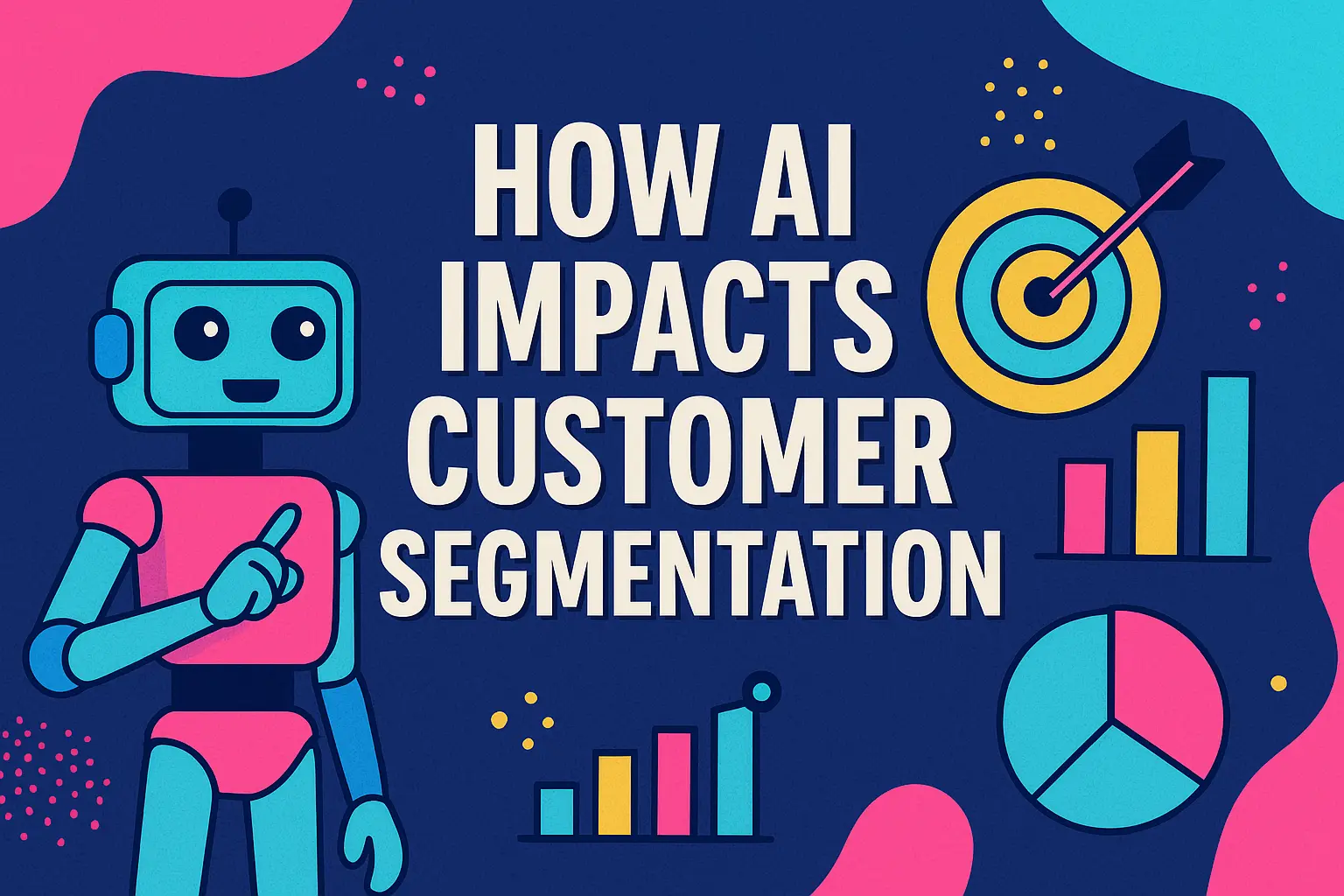
Customer segmentation has always been the backbone of marketing, but traditional methods can no longer keep pace with modern data-driven scenarios. The rise of artificial intelligence (AI) is changing that. It offers precision, speed and insight at a level human teams alone could never achieve. For tech startups, AI-driven segmentation is an opportunity to gain a competitive edge.
For B2B tech startups, the opportunity is enormous in the following ways:
- More relevant campaigns
- Lower acquisition costs
- Faster decision-making
- Better ROI
A New Frontier for Tech Marketing
The statistics tell a clear story:
- 70% of marketers already use AI for advanced customer segmentation.
- Segmentation accuracy improves by up to 85% with AI.
- Companies leveraging AI see a 30% boost in targeted ad performance.
- AI-powered segmentation reduces customer acquisition costs by 25%.
- 53% of marketers report better ROI.
Those are transformative improvements in marketing performance. Below, we explore what these numbers mean for startup marketers, the challenges in adopting AI-based segmentation and actionable steps to make AI a core driver of your go-to-market success.
From Broad Segments to Precision Microsegments
Historically, marketers have grouped customers into broad demographic or behavioural categories. That worked when data was limited. But AI has redefined what’s possible. AI tools now enable marketers to create microsegments in real-time. These are groups so specific that they might contain only a handful of users who share nuanced, predictive traits. For example, an AI model might detect a pattern among users who visit a pricing page twice in one week but haven’t converted. Instead of lumping them into a general “consideration” bucket, AI can identify this as a distinct, high-intent micro-segment and trigger personalised outreach — perhaps a chatbot conversation or limited-time offer.
If your CRM or marketing automation platform supports AI capabilities, start small. Test AI-powered audience segmentation on a single channel, such as LinkedIn Ads or email marketing, to observe how micro-segmentation impacts engagement.
Speed and Scale
Tech startups often move fast but lack resources. The beauty of AI is its ability to scale what would otherwise take weeks of manual work. Companies using AI see 50% faster customer profiling. That speed matters, particularly for B2B startups navigating short funding runways and aggressive growth targets. With AI automating segmentation, your team can redirect effort toward strategy — testing creative, refining messaging and nurturing high-value accounts.
Challenge:
The main barrier is data quality. Many startups struggle with fragmented systems — CRM data in HubSpot, product usage data in Mixpanel, billing info in Stripe and engagement metrics in Google Analytics. Without integration, AI models deliver flawed insights.
Action:
Before implementing AI segmentation, prioritise data unification. Tools like Segment, Hightouch or HubSpot’s Operations Hub can integrate multiple data sources, creating the foundation AI needs to deliver meaningful output.
AI and Campaign Effectiveness
AI-based segmentation increases campaign effectiveness by 40%, boosts CTR by 15% and delivers 24% more sales conversions. These results stem from AI’s ability to predict and personalise, two key levers of marketing success. By learning from thousands of touchpoints (website visits, downloads, purchase history, engagement frequency), AI can forecast which segment will respond to which message and at what time.
Example:
A B2B SaaS startup targeting mid-market CTOs could use AI to detect that early-stage leads engage more with thought leadership content, while later-stage leads respond better to ROI case studies. This insight allows for dynamic campaign optimisation in real time.
Action:
Adopt a closed-loop analytics model. Track performance metrics for each AI-defined segment, then feed that data back into the model to continuously refine accuracy.
ROI and Resource Efficiency
The most compelling statistics on this topic are:
- 53% of marketers report improved ROI with AI segmentation,
- and Marketing spend wastage drops by 28%.
For startups operating on limited budgets, this efficiency can make a real difference. AI not only allocates spending more effectively but also helps identify low-value segments early — eliminating wasted ad impressions and irrelevant nurture flows.
Action:
Run a comparative test. Allocate a small portion of your marketing spend to AI-driven campaigns and track the difference in cost per acquisition (CPA) and return on ad spend (ROAS) versus traditional campaigns.
Enhancing Personalisation and Retention
AI doesn’t just improve acquisition; it strengthens retention, too. Using AI for segmentation improves retention rates by 18%, while it drives a 22% increase in campaign personalisation. Personalisation today is about timing and relevance. AI can predict when a customer is at risk of churn and automatically trigger targeted retention actions — from email re-engagement to in-app messaging or proactive customer success outreach.
Action:
Implement predictive churn modelling within your CRM. Tools like HubSpot AI, Salesforce Einstein or Pipedrive AI can flag accounts showing signs of disengagement. Use this insight to deploy retention campaigns before customers drop off.
Better Understanding of Customer Preferences
Over 60% of businesses say AI improves their understanding of customer preferences. This is critical in B2B tech, where buying journeys are complex, multi-stakeholder and often opaque. AI can surface unseen correlations, for example, discovering that a certain persona responds best to social proof content during procurement stages or that decision-makers prefer short video explainers over whitepapers.
Challenge:
Startups can easily over-rely on AI-generated insights without context. AI can tell you what’s happening, but not always why. The “why” still requires human interpretation and cross-functional collaboration between marketing, product and customer success teams.
Action:
Pair AI insights with qualitative feedback loops — customer interviews, NPS surveys or win/loss analysis — to ensure your segmentation strategy reflects both data and human reality.
Lower Acquisition Costs, Higher Precision
AI reduces customer acquisition costs by 25%, and the driver behind this is precision targeting, not just identifying who your best customers are, but predicting who’s most likely to convert next. For early-stage startups, this is gold. Instead of blasting the same message across audiences, AI enables you to invest in high-probability prospects and shorten sales cycles.
Action:
Integrate AI-driven lead scoring within your CRM. Use models trained on previous conversion data to rank leads based on purchase likelihood. Align this with sales outreach for improved efficiency.
Implementation Challenges for Startups
While the benefits are clear, startups face unique challenges:
- Limited Data Volume
AI thrives on data, and startups often don’t have enough historical information.
- Tool Complexity
Many AI-powered platforms require setup expertise or API integration that early teams lack.
- Cost Concerns
Advanced AI tools can appear expensive, though many offer startup-friendly pricing tiers.
Action:
Begin with accessible, integrated AI tools, for example:
- HubSpot Marketing Hub for automated segmentation.
- Clearbit for enrichment and targeting.
- Zapier + ChatGPT integrations for predictive audience workflows.
Once your dataset grows, consider layering in more advanced models via platforms like Google Vertex AI or AWS SageMaker.
The Future of AI-Driven Segmentation
AI segmentation is evolving rapidly, and the next frontier lies in real-time, context-aware personalisation, where AI analyses live behaviour (scrolls, clicks, dwell time) and adjusts marketing messages on the fly. Expect to see increased use of generative AI for hyper-personalised content at scale, as well as deeper integration between AI, CRM and predictive analytics. Startups that build their marketing infrastructure around data agility will lead this next wave.
Strategic Takeaway
AI in customer segmentation is about efficiency, precision, prediction and performance. The challenge lies in execution, ensuring clean data, seamless integration and human oversight. Those who master it will create a powerful marketing engine capable of learning, adapting and scaling at startup speed. AI is redefining how startups understand and engage customers, and those who invest in smart segmentation now will not only grow faster but grow smarter. They will use data not just to see where they’ve been, but to predict where they’re going next.
*Sources:
- 70% of marketers use AI for advanced customer segmentation (Source: Gartner).
- AI improves segmentation accuracy by up to 85% (Source: Salesforce).
- Companies leveraging AI see a 30% improvement in targeted ad performance (Source: Nielsen).
- AI-based segmentation increases campaign effectiveness by 40% (Source: McKinsey).
- 53% of marketers report better ROI with AI-powered segmentation (Source: PwC).
- AI helps reduce customer acquisition costs by 25% through precise targeting (Source: Forrester).
- Segmentation using AI enhances click-through rates by 15% (Source: HubSpot).
- AI tools enable marketers to create micro-segments in real-time (Source: Accenture).
- Companies using AI see 50% faster customer profiling (Source: Statista).
- AI-based segmentation leads to a 22% increase in campaign personalization (Source: Adobe).
- Using AI for segmentation improves retention rates by 18% (Source: CMO Council).
- AI tools increase the precision of behavioral targeting by 35% (Source: Deloitte).
- Segmented campaigns powered by AI result in 24% more sales conversions (Source: Demand Gen Report).
- Over 60% of businesses say AI improves their ability to understand customer preferences (Source: Salesforce).
- AI-powered segmentation reduces marketing spend wastage by 28% (Source: Gartner).
You may want to read: “How to Define Your Target Market.”