B2B Marketing and Revenue Growth for Startups…
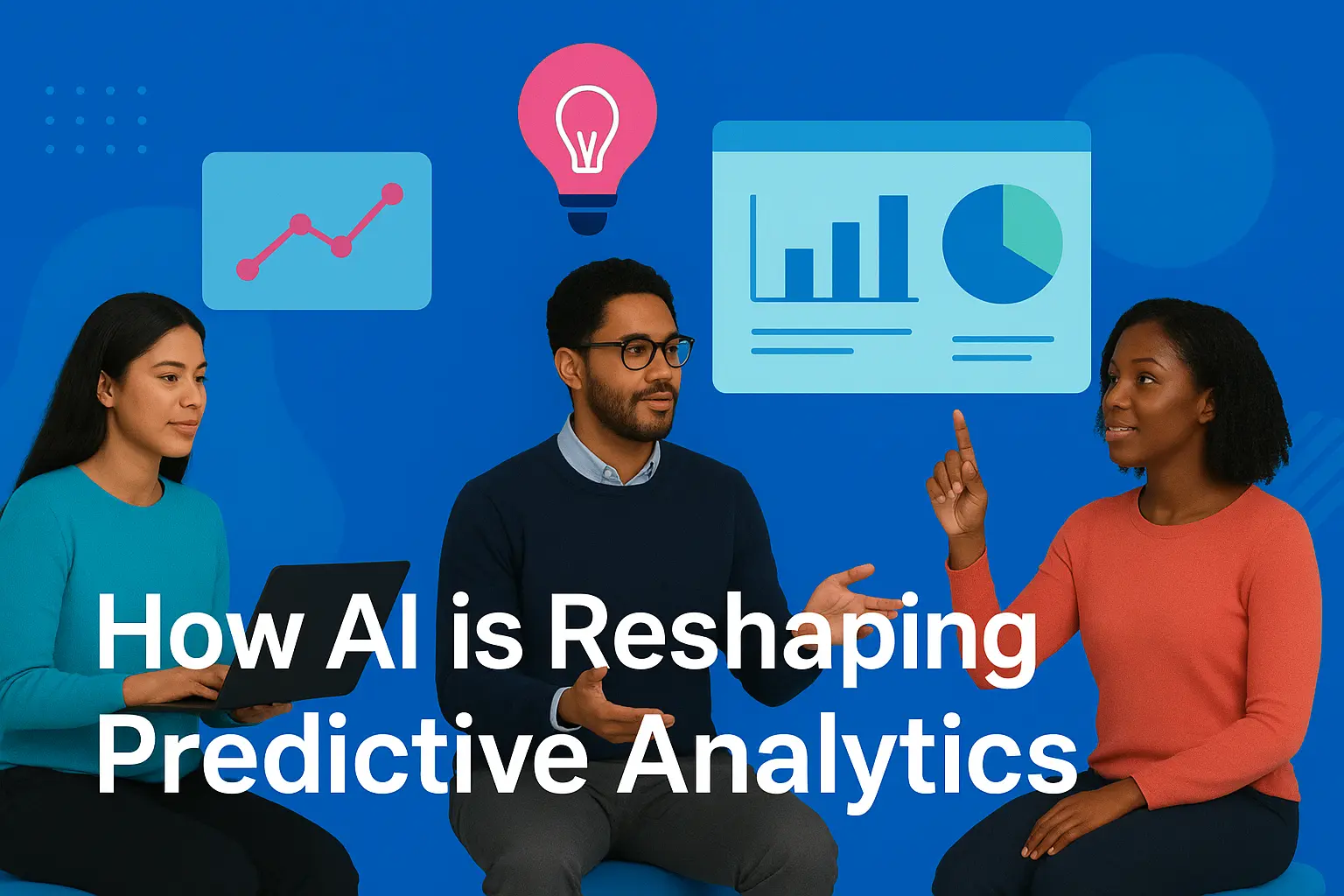
In the race to attract, convert and retain customers, B2B tech startups face many and varied challenges. However, learning how to make smarter, faster and more data-driven insights to inform decision-making is a critical skill, one that helps overcome many sticky situations. With shrinking budgets and higher expectations, the ability to predict outcomes before they happen has become an operational necessity. That’s where AI-driven predictive analytics comes in.
By combining artificial intelligence with advanced data modelling, predictive analytics empowers startups to forecast trends, understand customer behaviour and optimise marketing and sales strategies with remarkable precision. Accordingly, AI-driven predictive analytics increases forecasting accuracy by 85% — a transformative leap for startups where every decision may impact growth and cash flow. Below, we explore how AI-powered predictive analytics is impacting B2B marketing, what challenges it helps solve, and how startups can practically implement it to achieve better performance, efficiency and ROI.
Forecasting with Confidence
Traditional forecasting methods rely heavily on historical data and intuition, both of which can be flawed in fast-moving markets. AI-driven predictive models, however, use machine learning to analyse vast datasets and identify patterns that humans might miss. Most startups may not have vast datasets to analyse, so there will always be a need to use instinct, experience and market knowledge before relying on automation and AI. Once data is available, there are benefits to those who put it to work, for example, businesses using AI for forecasting see a 10–15% increase in revenue. That’s a significant improvement, and a direct correlation between better predictions and better business outcomes.
AI can process diverse data sources — CRM activity, marketing engagement, website interactions and market trends — to forecast sales performance, demand shifts and even potential churn. AI models can predict product demand with 90% accuracy, allowing startups to scale production or adjust campaigns proactively rather than reactively.
- Use AI-powered forecasting tools integrated with your CRM (like HubSpot, Salesforce Einstein or Zoho’s Zia).
- Feed your system both structured (e.g., transaction data) and unstructured (e.g., customer feedback, social sentiment) inputs.
- Create regular forecasting reviews where marketing, sales and finance collaborate on predictive insights rather than isolated reports.
From Gut Feel to Data Confidence
AI is speeding up analysis, which in turn is accelerating decision-making. Companies using predictive AI achieve decisions 3x faster than those that don’t. For tech startups operating in volatile environments, agility is everything. The faster teams can interpret data and act on it, the faster they can capitalise on opportunities or adjust strategies to combat risks. The real power lies not just in speed but in alignment. When marketing, sales and product teams operate from the same predictive insights, they can prioritise the same high-value opportunities.
Action:
- Build a shared “insights dashboard” across departments.
- Encourage data-informed decision-making as a company culture, not just a marketing function.
- Train teams to interpret predictive data — AI tools are only as effective as the people using them.
Better Lead Management
B2B startups often fall into the trap of chasing too many leads instead of the right ones. Predictive analytics changes that dynamic entirely. We now see that AI-enabled models identify high-value leads 2x more accurately, and 50% of marketers have improved lead scoring accuracy using AI. That level of precision means your team can spend time where it truly matters. Instead of working through large, unqualified databases, predictive models help focus on leads that are statistically more likely to convert or generate long-term value. 45% of businesses credit predictive AI for growth in customer lifetime value — proving that smarter targeting doesn’t just fill the funnel, it strengthens customer retention.
Action:
- Implement AI-driven lead scoring models that weigh engagement, firmographics, and behavioural data.
- Regularly retrain models based on performance outcomes.
- Sync your marketing automation with predictive lead scoring for dynamic nurture sequences.
Predict, Test and Refine Campaigns
Campaign optimisation has always been a guessing game, but now predictive analytics is starting to change the picture. Campaigns guided by predictive analytics see a 20% higher ROI, while further research shows a 12% increase in campaign efficiency when forecasting with AI. AI can forecast which campaigns will perform best based on historical engagement, audience segmentation and conversion behaviour. That insight enables marketers to allocate budget more strategically and focus spend where the data predicts higher returns. This means, AI-driven analytics can optimise marketing budgets by 25%, a crucial advantage for startups operating with leaner resources.
Action:
- Use AI tools to simulate campaign outcomes before launch.
- Monitor predictive signals mid-campaign to reallocate budget more dynamically.
- Focus on multi-channel alignment — predictive insights should guide both inbound and outbound efforts.
Predicting and Preventing Churn
Customer retention is one of the biggest levers for profitability, and predictive analytics can help stop churn before it starts, as it helps reduce customer churn by 27%. It can identify early warning signs such as reduced engagement or slower response times, allowing startups to take proactive steps to re-engage customers before they leave. Predictive models can also inform upselling and cross-selling strategies, with research indicating that AI improves cross-selling and upselling opportunities by 22%. This means AI isn’t just helping startups keep customers but can help them grow customer value.
Action:
- Set up predictive churn models using CRM and support data.
- Create automated retention workflows that trigger when risk signals appear.
- Train customer success teams to take action on predictive alerts quickly and personally.
Less Waste with More Precision
Predictive analytics can improveoperations across the business, with recent research suggesting that companies using predictive analytics experience 30% fewer product returns. This indicates predictive forecasting leads to better product-market alignment. Similarly, predictive AI allows teams to plan inventory, manage supply chains and anticipate customer demand with unprecedented accuracy. Increased efficiency also extends to marketing spend and internal resourcing. By reducing uncertainty, predictive analytics empowers startups to scale intelligently without unnecessary overhead.
Action:
- Use predictive demand forecasting to optimise product launches.
- Align marketing and product teams to build data-informed go-to-market plans.
- Track efficiency metrics monthly — not just conversion or revenue KPIs.
Why Early Adoption Matters
The adoption curve is already steep, with reports indicating that 62% of marketers now use AI for predictive analytics to inform strategy. Tech startups that delay adoption risk falling behind as competitors automate, optimise and accelerate. Predictive analytics can be the foundation for scalable growth.
The startups that will win are those that:
- Build AI literacy into their culture.
- Integrate predictive analytics directly into their go-to-market workflows.
- Treat data as a shared asset across teams.
Tomorrow’s Marketing Today
AI-driven predictive analytics helps startups develop the predictive muscle memory that will define tomorrow’s leaders. From 85% more accurate forecasts to 20% higher ROI campaigns and 27% reduced churn, the numbers speak for themselves: predictive analytics helps B2B marketing move from a reactive stance to a more proactive attitude. We understand that agility and precision can define success, and predictive AI can be the new baseline for your growth.
*Sources:
- AI-driven predictive analytics increases forecasting accuracy by 85% (Source: Forrester).
- 62% of marketers use AI for predictive analytics to inform strategy (Source: Statista).
- Businesses using AI for forecasting see a 10-15% increase in revenue (Source: McKinsey).
- Predictive analytics helps reduce customer churn by 27% (Source: Gartner).
- AI models predict product demand with 90% accuracy (Source: Deloitte).
- Campaigns guided by predictive analytics see a 20% higher ROI (Source: HubSpot).
- Companies using predictive AI achieve 3x faster decision-making (Source: PwC).
- AI-driven analytics help optimize marketing budgets by 25% (Source: CMO Council).
- 50% of marketers report improved lead scoring accuracy with AI (Source: Salesforce).
- Predictive analytics shortens the sales cycle by 15% (Source: Accenture).
- AI-enabled models identify high-value leads 2x more accurately (Source: Gartner).
- 45% of businesses credit predictive AI for growth in customer lifetime value (Source: Adobe).
- Forecasting with AI leads to a 12% increase in campaign efficiency (Source: Statista).
- Companies using predictive analytics see 30% fewer product returns (Source: Forrester).
- AI improves cross-selling and upselling opportunities by 22% (Source: McKinsey).
You may want to read: “How to Define Your Target Market.”