How Tech Startups Can Compete and Win…
Artificial intelligence (AI) is impacting every aspect of marketing, from how startups find and convert leads to how they predict buyer intent and deliver personalised experiences at scale. For B2B tech startups, this shift represents both a massive opportunity and a daunting challenge. The pace of AI adoption is accelerating rapidly, and those who fail to adapt risk falling behind not only in visibility and conversion but also in the sophistication of customer engagement and measurement.
According to research, 91% of leading businesses are investing in AI to drive marketing strategies, while AI adoption in marketing is projected to grow at a compound annual rate of 37.3% through 2030. For startups competing against better-funded incumbents, this data is a wake-up call. Tech businesses that succeed in the coming years won’t simply be those with the best products, but those who use techniques, such as AI, to understand, anticipate and engage customers more intelligently than anyone else.
Why AI in Marketing Matters
AI is helping to shift marketing from a reactive to a predictive approach. Traditional approaches rely heavily on manual segmentation, intuition and static reporting, often based on incomplete or outdated data. In contrast, AI empowers startups to analyse vast amounts of information in real-time, surfacing insights that guide decisions at every level of the funnel. From lead scoring and customer segmentation to automated personalisation, predictive analytics, and conversational chatbots, AI allows marketers to do more with less.
56% of companies report improved customer experiences through AI integration, while marketers using AI see a 44% improvement in customer acquisition rates. For startups, this is particularly powerful. Early-stage companies rarely have the luxury of large sales teams. With AI, they can automate key functions that were previously out of reach, providing enterprise-level capability at a fraction of the cost.
Startups Have High Potential, But Limited Resources
While AI holds enormous promise, many founders and marketers face a paradox: they know AI can help, but don’t know where to start.
The statistics reveal why urgency is needed:
- 63% of marketers have increased their spending on AI-based tools in the past year.
- 80% of marketing leaders use AI to enhance personalization.
- Yet only a fraction of startups use these tools strategically. This can be due to a lack of time, expertise or budget.
AI-powered marketing is projected to contribute $2.95 trillion to the global economy by 2032. The message for startups is clear: if you’re not building AI into your marketing stack, your competitors are.
Where AI Delivers Immediate Value
AI can deliver measurable impact today. Here are the key areas where startups can see a tangible return on investment:
1. Lead Scoring and Qualification
AI enables dynamic lead scoring based on real-time behaviour rather than static demographic data. By analysing engagement patterns — clicks, content downloads, time on page — startups can identify which prospects are most likely to convert. This translates into better time allocation for sales teams and a faster path to revenue. Companies using AI in lead scoring see 77% higher ROI compared to those relying on manual qualification.
2. Personalisation and Relevance
Personalisation is no longer a “nice to have.” 80% of customers expect AI-enhanced personalisation, yet 53% of buyers still say vendor content lacks relevance. AI helps bridge that gap. It can tailor messaging, recommend content and dynamically adjust user journeys based on behaviour. For B2B tech startups trying to stand out in crowded markets, this relevance builds credibility and trust faster than any cold outreach ever could.
3. Predictive Analytics for Pipeline Efficiency
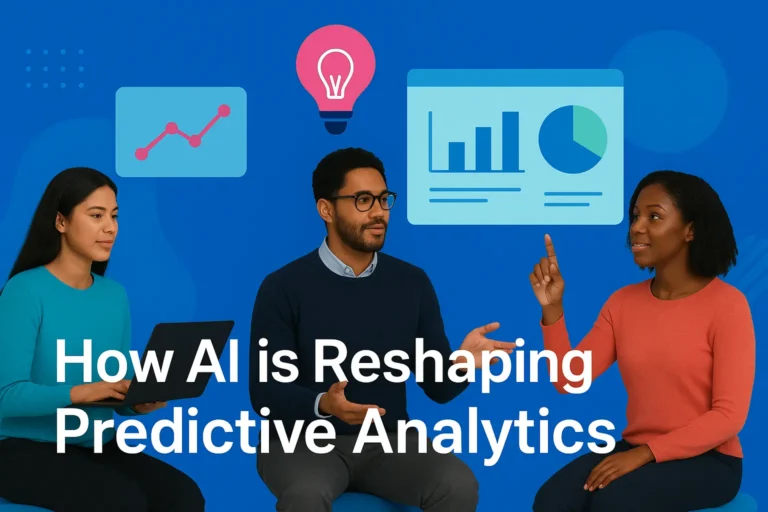
Predictive analytics allows startups to forecast sales outcomes and customer churn with greater precision. Marketers using AI can achieve 90% accuracy in forecasting consumer behaviour, improving campaign planning, budget allocation and deal velocity. Startups may also benefit from shorter sales cycles and smarter decisions, crucial in environments where every penny counts.
4. AI-Powered Content and Campaign Optimisation
Tools that provide AI, like ChatGPT, Jasper and HubSpot’s AI Assistant are now mainstream for content ideation, audience insights and message testing. However, true differentiation comes from how startups use these tools.
Rather than letting AI write generic copy, the best marketers use it to:
- Analyse audience sentiment and content performance.
- Identify which messages resonate by persona or industry.
- Optimise headlines, email subject lines and landing page copy in real time.
Marketing campaigns using AI see a 50% higher engagement rate.
5. Conversational AI and Customer Experience
AI-powered chatbots now handle up to 85% of customer inquiries in real-time, reducing response times and enhancing user experience. For startups, this means customer support and lead capture can operate 24/7 without scaling costs. A well-designed chatbot answers questions, nurtures leads, qualifies intent and hands over warm prospects to sales teams.
6. Cost Efficiency and ROI Optimisation
AI helps marketers identify underperforming campaigns, optimise ad spend and reduce waste. AI tools reduce marketing costs by 20% on average, while AI-driven insights improve average revenue per account by 23%. In tight-budget startup environments, those savings and efficiencies can mean the difference between stagnation and sustainable growth.
AI Isn’t a Silver Bullet
Despite the promise and levels of hype, startups should be realistic about AI’s limitations. Success depends not on having AI tools but on using them strategically.
Common pitfalls include:
- Data Fragmentation
AI is only as good as the data it learns from. Startups often lack integrated CRM and analytics systems.
- Skill Gaps
Without the right training, marketers can misinterpret insights or automate the wrong processes.
- Overreliance On Automation:
AI can inform decisions, but it can’t replace human judgment or creativity.
To overcome these, startups must focus on alignment and process maturity before implementing full automation. The goal isn’t to replace marketers with machines, but to increase efficiency by achieving results faster.
Actionable Guidance for Startups
Here’s a roadmap to ensure AI in marketing drives real impact:
- Start Small, Scale Fast – Identify one or two high-impact areas (e.g., lead scoring or email personalisation) to test before rolling out more complex automations.
- Invest in Data Quality – Clean, unified data across CRM, analytics and marketing automation systems is critical for reliable AI outcomes.
- Marketing and Sales Integration – Companies aligning these teams grow 32% faster. Shared KPIs ensure AI-generated insights are acted on effectively.
- Feedback Loops – Combine AI insights with human feedback to continually refine targeting and messaging.
- Prioritise Ethical AI – Transparency in how AI influences decisions can build trust with both customers and employees.
- Measure The Right KPIs – Track performance metrics like CAC, engagement rate and conversion velocity to quantify AI’s impact.
The Future of AI in Startup Marketing
As AI-powered marketing evolves, the startups that thrive will be those that combine automation with empathy. You must use data to enhance human connection, not replace it.
The statistics speak volumes:
- 75% of enterprises believe AI will be critical to marketing success within five years.
- 42% of marketers say AI is now their most important technology.
A Startup’s advantage is its agility. They can adopt new tools faster than established competitors bogged down by legacy systems. With the right strategy, AI can help level the playing field, enabling small teams to compete and win. Using insight, personalisation and precision takes startups to the next level of their development.
The Ultimate Speed Tool
AI in marketing is quickly becoming one of the foundations for competitive advantage for the next decade. For tech startups, it offers the rare combination of scalability, cost efficiency and customer intimacy. The choice is no longer whether to use AI, but how well you use it. Those who embrace intelligent automation today will be the growth leaders of tomorrow. Tech marketers want to be smarter, faster and more relevant in every customer interaction, but can AI help them to do this? The answer is a resounding yes, but start small and build on top of quick wins before expanding capability and capacity.
*Sources:
- 91% of leading businesses are investing in AI to drive marketing strategies (Source: PwC).
- AI adoption in marketing is expected to grow at a CAGR of 37.3% from 2023 to 2030 (Source: Grand View Research).
- 63% of marketers have increased their spending on AI-based tools in the past year (Source: Salesforce).
- AI-powered marketing is projected to contribute $2.95 trillion to the global economy by 2032 (Source: Statista).
- 56% of companies report better customer experiences due to AI integration in marketing (Source: Deloitte).
- Marketers using AI see a 44% improvement in customer acquisition rates (Source: Forrester).
- AI tools help reduce marketing costs by an average of 20% (Source: McKinsey).
- Over 80% of marketing leaders use AI to enhance personalization efforts (Source: Gartner).
- AI-driven marketing boosts conversion rates by up to 30% (Source: HubSpot).
- 75% of enterprises believe AI will be critical to their marketing success within five years (Source: Accenture).
- 62% of customers expect companies to use AI for improved interactions (Source: Adobe).
- AI-powered chatbots handle 85% of customer inquiries in real-time (Source: Business Insider).
- Marketing campaigns leveraging AI experience a 50% higher engagement rate (Source: Nielsen).
- Marketers using AI predict 90% accuracy in forecasting consumer behavior (Source: MIT Technology Review).
- 42% of marketing professionals say AI is their most important technology (Source: CMO Council).
You may want to read: “How to Define Your Target Market.”