Why Andrew Tate is One of the Best marketers of Our Time…
In the world of marketing, particularly for B2B tech startups, it’s easy to get bogged down in strategies, tools and data, but sometimes the most effective lessons come from unlikely places. Love him or loathe him, controversial Andrew Tate is a name that’s hard to miss in the current digital landscape. Regardless of how one feels about him personally, there’s no denying his marketing prowess. Tate has built a personal brand that’s not just visible but inescapable. So, what can B2B tech founder-CEOs learn from Tate’s meteoric rise to fame, and how can you apply these lessons effectively to your personal brand to help elevate a startup?
What B2B Tech Founders Can Learn from Andrew Tate
You don’t necessarily have to be a loud and opinionated misogynist, offering a polemical commentary on every political event to get noticed. Everyone must be their true, authentic selves, but if you’re a tech founder-CEO, having a strong point of view relevant to your product category and target market provides an important platform to comment and raise awareness.
Top 8 Marketing Lessons
Here’s my list of the top 8 lessons tech founders can learn from Tate, the master of never shutting up:
1. Visibility is Key – Be Everywhere
Andrew Tate has mastered the art of omnipresence. Whether you’re on YouTube, TikTok, Insta or twittering on X, Tate’s face is probably somewhere in your feed. He didn’t rely on paid ads or traditional media campaigns but instead utilised a cost-effective strategy: user-generated content. His fans, motivated by affiliate commissions from his online courses, shared his videos far and wide, creating a tidal wave of content that made him almost impossible to avoid.
For B2B tech founders, this shows the power of consistent visibility. Being present in your industry across multiple channels, such as relevant blogs, webinars, social media, events and podcasts, means your brand stays front and centre in the minds of potential customers. You don’t need a massive budget to achieve this, but you may need to make the most of existing personal connections and third-party audiences. Incentivising your team, clients and partners to promote your brand is also helpful. The key takeaway? Get people talking about you and your product, whether that’s through content sharing, case studies, customer testimonials or all the above.
Tate was able to do this without any company-branded clothing in sight. For him a hoodie symbolises a lack of seriousness or ambition. He would proffer that if you’re a serious tech founder or business leader, you should be presenting yourself like a high-status individual. The message might be something along the lines of: “Why wear a hoodie when you can wear a suit that commands attention and signals authority?”
2. Messaging That Grabs Attention
Tate is notorious for his bold, often controversial statements, but this polarising messaging is part of what makes him so effective. He knows how to grab attention by challenging modern ways of life and stirring debate. While B2B tech startups may not want to aim for quite the same level of controversy, they can benefit from making bold claims or taking strong stances in their niche, provided it can be backed up of course. Are you solving a problem that no one else dares to tackle? Are you willing to disrupt the status quo? Don’t be afraid to let that show in your messaging.
Remember, in B2B tech, your audience isn’t desperate to buy a new solution; they’re looking for someone to help them fix a problem, overcome a challenge, grow their business and look good amongst their peers. They want to be associated with a company that has a unique point of view and isn’t afraid to share it. Strong messaging, backed by confidence in your product, can help you and your brand stand out from the crowd.
3. The Power of Personal Branding
Tate didn’t just sell products; he sold himself. His personal brand is inextricably linked to everything he promotes. For tech founders, this is an invaluable lesson, and whether you realise it or not, you are your company’s best marketing and sales tool. People want to do business with other people, not faceless corporations. By positioning yourself as someone with something relevant and helpful to say, you humanise your company and make it more relatable.
Attending industry events, speaking on panels, publishing opinion articles and building your personal reputation as an expert in your field all help to elevate the position of your startup. Whether you’re selling SaaS, cloud computing or managed services, people need to trust the person behind the business. If you can captivate your audience as a founder, you’ve already won half the battle. Better still, get the other members of your leadership team to promote themselves in their respective professional fields as well.
4. Create Urgency and Exclusivity
Tate has always played the scarcity card well; whether it’s through time-limited offers or exclusive access to his courses, he’s created a sense of urgency that prompts immediate action. B2B tech startups can adopt a similar approach by offering expiring benefits, exclusive early access to new features or joining a beta programme just for select clients. When you make your product or service feel exclusive, it builds anticipation and creates demand. Use this tactic wisely to entice potential customers and encourage them to act sooner rather than later. This is particularly effective in enterprise software sales or custom tech solutions where the sales cycle can be long, and prospects often need a nudge.
5. Relentless Self Promotion
Tate is unapologetically relentless in promoting himself and doesn’t shy away from showcasing his successes, lifestyle and business ventures. For B2B tech founders, this can feel awkward, as nobody likes to come across as boastful. However, there’s a fine line between arrogance and confidence. If you’re solving big problems and winning landmark contracts, let the world know! Celebrate your successes in an appropriate way that can be shared, highlight major partnerships and showcase client wins. Your prospects want to know that you’re a trusted, successful player in your industry, so don’t shy away from telling your story, especially if it can help you connect with future customers. Humility is admirable, but in marketing, visibility is king.
6. Use Social Proof and Testimonials
A key component of Tate’s success is the endless stream of testimonials from followers who have benefited from his teachings. Whether or not these testimonials are genuine is another story, but the psychological impact is clear; social proof works. In the B2B tech industry, this translates to client testimonials, case studies and success stories. Prospects want to see that your startup has worked for other organisations just like theirs, before they commit. If you can demonstrate your solution delivers real-world business benefits that create tangible value, you’ll build trust and credibility with prospects more quickly.
7. Mastering the Art of Storytelling
Tate is a master storyteller, with a rags-to-riches narrative that captivates audiences, and he uses this personal journey as a tool to inspire and motivate others. For B2B tech companies, the takeaway here is simple: people connect with stories, not features or products. When marketing your product, don’t focus on what it does; focus on the stories behind it and the difference it will make to the customer. How did it come to be? What problem did you set out to solve? How has it transformed your customers’ business and their relationships with their customers? By weaving storytelling into your marketing strategy, you create a narrative that resonates on a deeper level.
8. Lead from the Front
A shrinking violet of a CEO, who fears the limelight, shunning media and promotional opportunities, is of little use to any startup. Perhaps the most important lesson from Tate’s success is his willingness to lead from the front. He’s the face of everything he promotes, and he consistently communicates his vision to his audience. For tech founders, this is crucial, as you must be the face and the voice of your business, and you can’t abdicate this responsibility to your team. Be involved, be visible and, most importantly, lead by example. Your role as a founder-CEO is to steer the ship, but part of that means being at the forefront of your company’s public image. Be the figurehead at the front, so your employees, partners and customers can follow.
Keep Your Shirt On
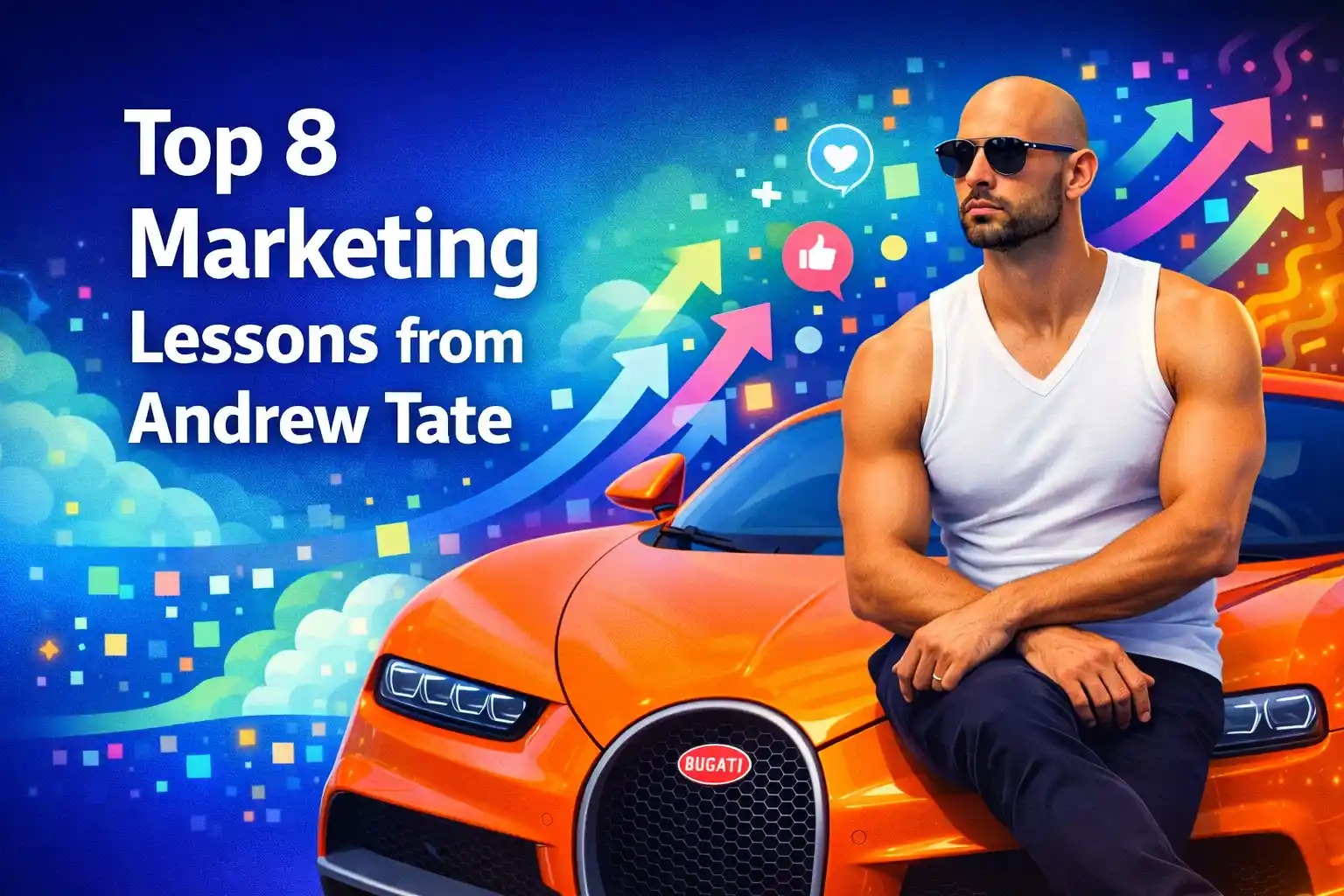
While you don’t need to emulate Andrew Tate’s controversial and, some may say, aggressive approach to personal branding, there’s no denying the marketing lessons he offers. At a time when attention is currency, being bold, visible and unapologetically present in your industry can be a great advantage. So, take a few pages from Tate’s playbook, just maybe don’t do it in a string vest, smoking a large cigar and wearing sunglasses while sat arrogantly across the bonnet of a Bugatti.
Disclaimer:
The author is not professing to be a Tate fanboy, as this article is written purely for entertainment purposes only. No Bugatti motor vehicles were taken as payment for publishing this article.
You may want to read: “How to Define Your Target Market.”