What’s Going On, Marvin? …
Maintaining a competitive edge as your market becomes increasingly crowded with similar offerings is a challenge every B2B tech startup is likely to face. As more companies enter your category, finding ways to distinguish yourself from them can be challenging but essential. Even offerings in adjacent categories will create lots of noise and confusion for your target audience, as customers try to unpick crossover and conflicting messaging to understand which is the best solution for their needs. It’s always important to keep an eye on what’s going on in the market around you, but this must be done in the context of gaining knowledge and tracking trends. Never act out of fear or make knee-jerk, reactive decisions based on what others may be doing or saying.
What is Competitive Analysis?
Competitive analysis is an important source of information that supports your strategic decision-making. It is the systematic process of identifying market rivals and evaluating their strengths, weaknesses, business models, and strategies. In a B2B tech setting, it focuses on comparing product capabilities, pricing models and go-to-market execution to uncover gaps and establish a strong strategic advantage. Whether it’s pricing strategy, market entry or expansion plans, having a thorough understanding of your market empowers you to make informed decisions that align with long-term goals. This strategic foresight can be essential for achieving success.
Competitive Strategy – Good
While you observe other players, it’s vital to continue with your own strategy and trust your plan, rather than making decisions based on partial information every time a competitor changes their website or makes a pricing update. The purpose of this strategic process involves evaluating and understanding your competition to identify opportunities and real threats. Not everything a competitor does represents a material risk to your business or requires a countering action or message. Researching, documenting and discussing this information with your team will help to make informed decisions that enhance your positioning and growth prospects.
Distraction Strategy – Bad
Do not become overly distracted by other companies, so that your strategy becomes a copycat by emulating them and always seeking to react to their moves. Adopting similar messaging or following their lead is a disastrous endeavour, one that will ensure you lose any semblance of identity or differentiation. This is not how you stand out from the crowd. If you fall into the trap of liking what you see and paying the largest compliment to your competitors by trying to be like them, this could be catastrophic. By making your startup look the same as your competitors, you just made achieving success at least 1,000 times harder, if not impossible. Don’t allow your team to be distracted by market noise. Pay attention to important competitor information, discuss it in context and take away any learnings that help you refine and improve what you are doing, but never get bogged down by it or follow their lead.
Warning: Stay Consistent and Focused
As a startup founder or tech marketer, part of your job is to observe and understand the dynamics of your market, while doing everything you can to ensure your message is clear, concise, understood and unique to your business. Only change what you are doing at a tactical level if you need to counter what others may be claiming, whether falsely or otherwise. You can deposition competitors in a head-to-head sales opportunity with facts and information, rather than reinventing your brand and messaging and risking looking inauthentic, random and incoherent. Always stay true to your strategy, your message and your core values. Until and unless a seismic market shift requires something new, stay calm and collected in the heat of competition. Even when adjusting your strategy to meet market change, any move must be recognisable by being consistent with who you are and what you stand for.
Win/Loss Analysis
Conducting win/loss analysis is crucial in sales as it provides valuable insights into why deals are won or lost. This is often ignored when a deal is won, because of the excitement of winning a new customer and as the focus now shifts to delivery and onboarding, while sales move on to closing the next deal. However, spending a bit of time understanding why a deal was won is important and will provide valuable information that could help position your offering in future sales opportunities.
Losing a deal has a very different emotion associated with it than winning one and often instigates an automatic and deep self-analysis of what went wrong. This must be done with every lost opportunity, including those that looked promising on the surface but just went cold for no apparent reason. For example, understanding why a prospect stopped talking to you is a revealing insight that you must understand. All this information must be documented and shared with marketing, sales and the leadership team so it can be referenced and help shape future planning and tactics.
12 Month Customer Review
Going back to customers a year later to monitor progress reveals another layer of information that can be extremely beneficial in understanding your strengths and weaknesses. Did the solution do what they thought it would do? What did it deliver versus the customer’s perceptions? Can they state their expected Return on Investment? Have they been able to calculate quantifiable benefits? Are there other benefits or improved business outcomes, anecdotal perhaps, that were not advertised but are worthy of mention? These insights may be used to refine the messaging, write case studies and can be applied to other sales engagements.
Look for Patterns
Sales analysis helps identify patterns in customer behaviour, opinions and preferences, allowing you to better tailor products and messaging to meet market needs. By understanding the reasons behind successes and failures, you can adjust your marketing and sales approach, improve value propositions and enhance customer relationships. Additionally, win/loss analysis assists competitive intelligence, highlighting areas where competitors may have an advantage and where your startup can focus to differentiate itself. Overall, this analysis is a strategic tool that helps continuous improvement to fuel growth.
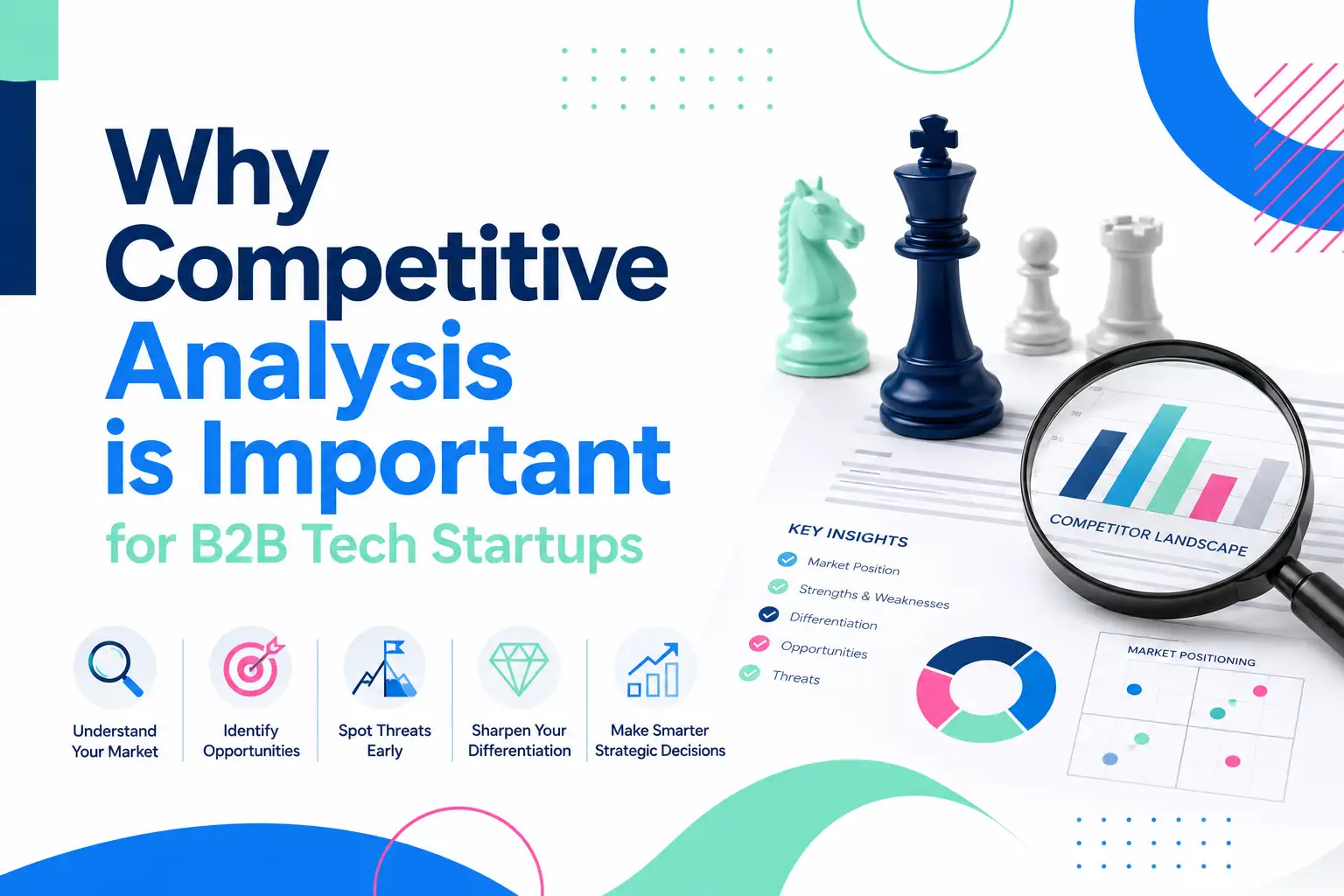
Top 5 Reasons Why Competitive Analysis is Crucial for B2B Tech Startups
1. Understand Market Dynamics
Competitive analysis helps you gain a comprehensive understanding of the market. By analysing economic, political and competition factors, you can identify gaps in the market that can be exploited and may give you an advantage. This understanding allows you to anticipate market shifts and adapt strategies, ensuring you remain relevant with customers.
2. Identify Unique Value Propositions
Identifying your unique value propositions (UVPs), by understanding what competitors offer and where they fall short is achieved through this analysis. By pinpointing what makes your product or service unique in the eyes of the customer, you can better communicate value to potential clients, creating a strong brand identity and increasing your chances of attracting and retaining clients. This differentiation is especially important in the B2B tech sector, where products and services can often seem interchangeable.
3. Enhance Product Development
Market analysis helps you gather insights into the product requirements that resonate with customers. This information is invaluable for product development, as it guides your startup in refining offerings to better meet customer needs. Understanding competitor products also helps avoid potential pitfalls, allowing you to innovate in areas where competitors may be lacking.
4. Insights Inform Marketing Activity
Market insights will help inform your marketing strategy by highlighting where competitors are strong and weak, as well as what marketing efforts they focus on. By understanding their marketing tactics, messaging, pricing and channels, you can craft more effective marketing plans that focus on your unique strengths. These insights help you allocate resources more efficiently and target the right segments with tailored messaging.
5. Mitigate Risk
Entering a competitive market without understanding it can be risky for any startup. Competitive analysis mitigates these risks by providing a clearer picture of potential challenges and obstacles. By identifying competitors’ strategies and market positioning, you can anticipate challenges and proactively develop strategies to address them, reducing the likelihood of costly mistakes.
Make Sensible Adjustments to Your Plans
Competitive analysis is an indispensable tool, providing valuable insights into market trends, what competitors are doing and saying and customer preferences. This information is necessary to develop effective strategies that enhance your competitive edge and drive growth. It must be an ongoing activity of research and information collection that is documented and regularly reviewed together by senior decision makers across marketing, sales, product, customer success and development teams. All information needs to be distilled and understood in the context of your business and its market positioning. Avoid making knee-jerk reactions based on what others are doing and don’t allow your own strategy and messaging to be watered down in a vain attempt to keep up with others. Stay focused and resolute and make sensible strategic and tactical adjustments only when necessary.
You may want to read: “Startups Must Understand Buyer Personas.”