What Really Matters for Tech Startups …
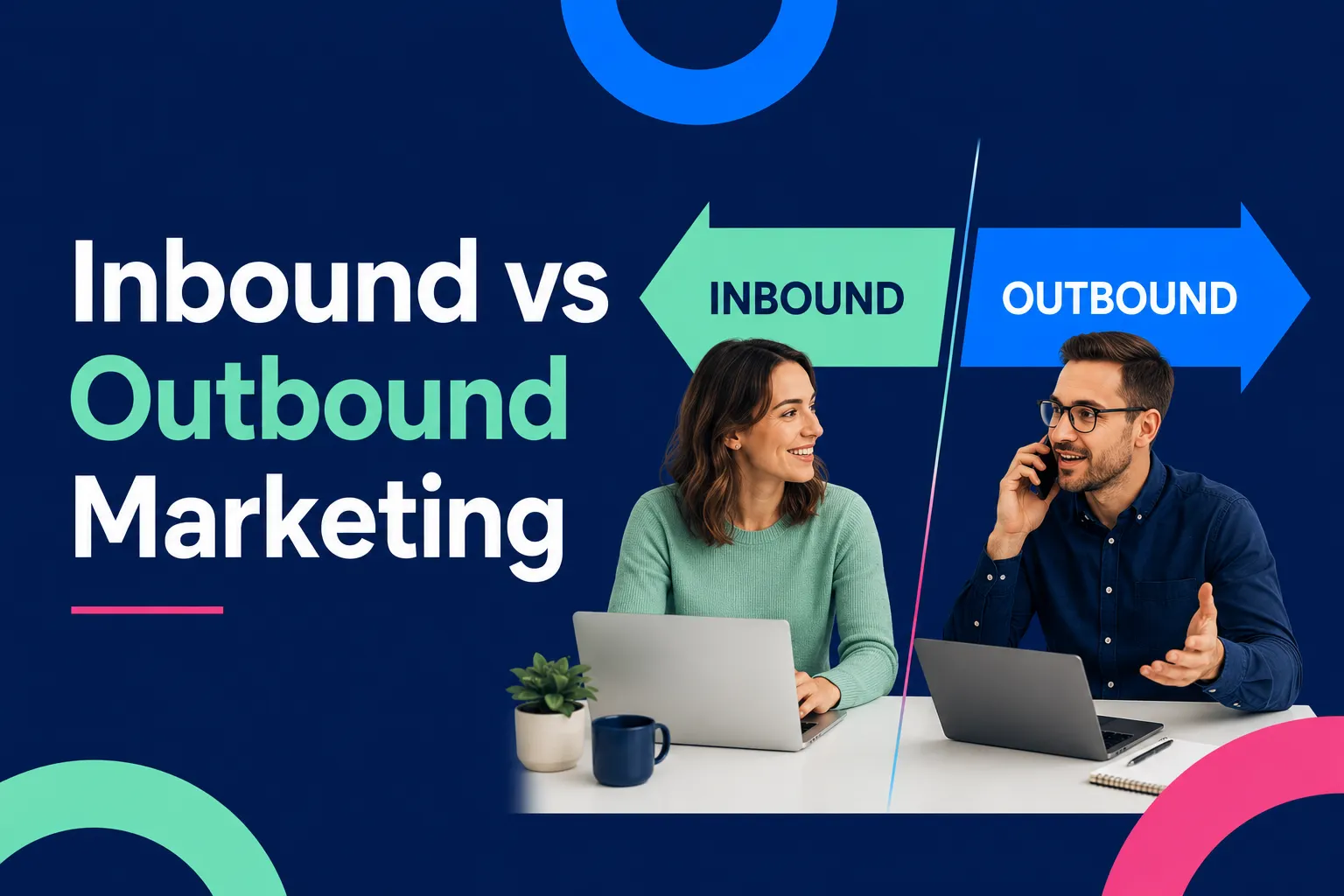
Inbound and outbound marketing are two terms that have become deeply embedded in the language of modern B2B marketing. They are often presented as opposing approaches, with inbound associated with content, search and prospects coming to you. In contrast, outbound is associated with direct outreach, campaigns and sales teams going after prospects. For tech startups, the distinction is not always as clear as it first appears. In fact, the two approaches can look remarkably similar. Both involve identifying an audience, developing compelling messages, creating content, distributing that content, generating awareness and ultimately turning interest into sales opportunities. Both can use email, social media, events, digital advertising, webinars and thought leadership. Both can be highly targeted, and both ultimately have the same objective: creating demand and generating profitable customers.
Which Kind of Marketing is Right for Tech Startups?
For a startup, the real question is much simpler:
What combination of marketing activities will create sufficient market momentum, generate qualified demand and win customers at the pace and cost the business requires?
What’s Important to Founders?
The important distinction is not necessarily what marketing activity looks like on the surface, but the mindset, approach, process and desired outcome behind it. More importantly, startups should be careful not to become obsessed with whether an activity is technically “inbound” or “outbound”. Marketing is a dynamic discipline that has evolved continuously over decades. Before the term inbound marketing had even been coined, marketers were already creating useful content, educating audiences, building communities, generating interest and attracting potential customers. They were doing inbound marketing without necessarily calling it that.
But What’s the Difference?
The differences between inbound and outbound marketing are worth understanding, but it’s also important to appreciate that the nuances matter less than what you’re trying to achieve. The focus must always be on your business objectives and selecting the most appropriate methods to achieve them.
What is Inbound Marketing?
Inbound marketing is generally defined as an approach that attracts potential customers by providing valuable, relevant information and experiences rather than directly interrupting your prospects with a sales message.
The objective is to make your company discoverable and useful to people who are already researching a problem, opportunity or solution.
Typical inbound activities include:
- SEO and organic search
- Blog articles
- Educational content
- White papers and guides
- Webinars
- Podcasts
- Social media content
- Videos
- Case studies
- Email nurturing
- Product-led content
- Thought leadership
The theory is straightforward. A potential customer identifies a problem in their business they need to fix. They search for information and discover your content. They engage with it, and over time they develop an understanding of your company and potentially become a prospect at the appropriate time. You are effectively creating an environment where a prospect can find its way towards the business.
What is Outbound Marketing?
Outbound marketing takes a more proactive approach. Rather than waiting for potential customers to discover your business, the company actively identifies relevant prospects and initiates engagement.
Typical outbound activities include:
- Cold email
- Telephone prospecting
- Account-Based Marketing
- Direct mail
- Targeted advertising
- Event invitations
- Sales development campaigns
- LinkedIn outreach
- Partner introductions
- Targeted executive engagement
The objective is to put the company, its message or its proposition directly in front of the people you believe are most likely to become customers. This can be particularly valuable for B2B tech startups because they often operate in highly specialised markets with relatively small numbers of potential customers. If there are only 2,000 organisations in the world that represent your Ideal Customer Profile (ICP), waiting for them to discover your website may not be the most efficient route to market. Sometimes you need to go and find them.
Why Do Inbound and Outbound Look So Similar?
This is where the distinction becomes interesting. Imagine a startup creates a comprehensive guide called “The Complete Guide to Cyber Resilience for Manufacturing Businesses.” The company publishes it on its website. It promotes the guide through LinkedIn. It sends the guide to its database. It runs an advertising campaign. It invites selected prospects to download it. It uses the content during sales conversations. It creates a webinar based on the guide. It turns sections of the guide into social posts. Is that inbound or outbound?
The answer is potentially both.
The underlying asset (the guide) is content. The difference is how that content is used and how the audience is reached. Someone discovering the guide through Google is an inbound interaction. A salesperson sending it directly to a target prospect is outbound. The company promoting it through paid advertising sits somewhere between the two. The content itself hasn’t changed, but the distribution and engagement strategy has. This is why the debate can become unnecessarily complicated or tedious.
The Difference in Mindset
Perhaps the biggest difference is mindset.
- Inbound generally starts with: “How can we create something valuable that our target audience will want to find and consume?”
- Outbound starts with: “Who do we want to reach, and how can we get our message in front of them?”
Inbound therefore tends to be audience-led and attraction-oriented. Outbound tends to be target-led and activation-oriented. However, sophisticated marketing teams understand that both approaches can be audience-led and the answers to both questions can be the same. An ABM campaign, for example, might identify 100 companies that perfectly match a startup’s ICP and then develop highly relevant content specifically for those organisations. That is an outbound activity powered by inbound thinking. This is nothing new; as marketers, we have always done this.
The Difference in Approach
Inbound typically builds an audience over time. The business creates a library of useful content that can continue attracting prospects through search, social sharing, referrals and other channels. This means inbound can create a cumulative effect. A good article published today can continue generating traffic months or even years later.
Outbound tends to be more immediate. A campaign can be launched today, prospects contacted tomorrow and sales conversations generated within weeks. The downside is that outbound activity often requires continuous investment. Stop the campaigns and the activity can quickly decline.
This means:
- Inbound has the potential to become an increasingly valuable marketing asset.
- Outbound provides greater control over who is contacted and when.
For startups, both characteristics can be extremely valuable, and that’s why getting hung up on either is a potential trapdoor.
The Difference in Process
Inbound often follows a journey such as:
- Content → Discovery → Engagement → Nurture → Intent → Sales Conversation
Outbound may follow:
- Target Account → Contact → Engagement → Nurture → Intent → Sales Conversation
Notice something? The middle and final stages can be almost identical. Both approaches require good data, a compelling message, effective content, nurturing, sales and marketing alignment and measurement. The major difference is how the prospect enters the process.
The Difference in Outcome
Inbound is often measured through metrics such as:
- Website traffic
- Organic search visibility
- Content engagement
- Downloads
- Subscribers
- Marketing-qualified leads
- Inbound opportunities
- Customer acquisition
Outbound tends to focus more heavily on:
- Accounts contacted
- Contacts engaged
- Response rates
- Meetings
- Opportunities
- Pipeline generated
- Revenue
However, startups must be careful here. Traffic isn’t the objective, downloads aren’t the objective, and meetings aren’t even necessarily the objective. The ultimate objective is commercially valuable customer acquisition. Marketing needs to create sufficient awareness and demand to support the company’s growth objectives.
Content is the Common Denominator
This is perhaps the most important point. Regardless of whether a startup describes its marketing strategy as inbound, outbound, ABM, demand generation or something else, content is one of the fundamental engines of modern B2B marketing. A startup needs things to say. It needs ideas to communicate and expertise to demonstrate. It needs evidence to build credibility and stories to tell. That content can then be syndicated across multiple channels.
A single research report might become:
- A blog article
- A LinkedIn post
- A webinar
- An email campaign
- A sales presentation
- A video
- An infographic
- A customer discussion
- A PR story
The same underlying idea can power both inbound and outbound activity.
This is not new. Long before “inbound marketing” became a recognised term, marketers were producing educational publications, newsletters, research reports, events, articles and other forms of useful content designed to attract and influence potential customers.
What we see in marketing today is:
- The technology has changed.
- The channels have changed.
- The terminology has changed.
- The fundamental principles haven’t!
Don’t Get Hung Up on the Labels
For a technology startup, spending too much time debating whether something is inbound or outbound can become a distraction.
The more important questions are:
- Are we reaching the right audience?
- Are we creating sufficient awareness?
- Are we communicating something valuable?
- Are we generating genuine interest?
- Are we creating sales conversations?
- Are we doing it efficiently?
- Are we generating enough pipeline to achieve our growth objectives?
These are the questions that matter.
A startup with a small addressable market may need a highly targeted outbound strategy supported by sophisticated content marketing. Another startup with a huge potential market may find SEO and content-led inbound marketing incredibly effective. Most successful businesses will inevitably use a combination of both.
Marketing is Dynamic
Perhaps the biggest mistake is believing that marketing must fit neatly into predefined categories when it doesn’t. Marketing evolves as markets evolve, customer behaviour changes, technology changes, new channels emerge and companies experiment. Strategies that work today may become less effective tomorrow.
The best marketing teams focus on outcomes rather than labels, and they do this through a rigorous process of:
- Test
- Measure
- Learn
- Adapt
They invest more heavily in the channels and activities that generate the strongest commercial returns. For a startup, this is particularly important because resources are limited, so marketing needs to create momentum without wasting money.
Don’t Be Bound
Inbound and outbound marketing are useful terms because they help describe different approaches to reaching potential customers. They must never become competing philosophies that force a startup to choose one over the other. Inbound is generally about attracting prospects through valuable content and experiences. Outbound is about proactively identifying and engaging the prospects that matter. The mindset, process and timing can be different, but the two approaches increasingly overlap in practice.
Ultimately, it doesn’t really matter what you call it: inbound, outbound, demand generation, ABM or simply call it marketing. What matters is that your startup creates awareness, generates interest, builds relationships, creates sales conversations and wins customers at a cost and pace that supports the business plan. Marketing has always been about finding ways to get the right message in front of the right people. Content creation and the effective syndication of that content remain at the heart of that process.
The smartest startups won’t get hung up on whether an activity belongs in the inbound or outbound box. They will focus on what works, continually refine their approach and build the combination of activities that creates the market momentum required to turn a startup into a success.
You may want to read: “Startups Must Understand Buyer Personas.”