What Can We Learn from the Success of Others? …
No startup’s success can be attributed to GTM strategy alone. Product quality, timing, funding, competition and market conditions also matter. Nevertheless, several recent examples illustrate useful principles that early-stage B2B technology companies can apply.
1. Learning from Failed Launches
Product-Led Growth, Positioning and Community: Lovable’s own account of its journey describes how its early launches struggled because the product’s branding, capabilities and user needs weren’t sufficiently aligned. The team refined its positioning, improved the product, built integrations, prepared a stronger Product Hunt launch and engaged developer communities and partners.
Why it Worked: The team treated early traction as something to learn from rather than proof that its initial strategy was correct. Product improvements and distribution reinforced each other.
Lesson: Don’t confuse launch attention with product-market fit. Measure activation, retention and actual customer value, not just registrations or social engagement.
2. Customer Value and Experimentation
Clear Positioning, Rapid Learning and Commercial Execution: In September 2025, Ramp described reaching $1 billion in annualised revenue and highlighted customer-aligned incentives, rapid product improvement, leadership evolution and hiring people with stronger functional expertise. Its early GTM team also experimented with founder-led sales, warm introductions and different acquisition approaches while the organisation was small.
Why it Worked: Ramp’s approach connected a tangible customer benefit—saving businesses time and money—with ongoing product improvements and a willingness to experiment.
Lesson: Start with a compelling customer outcome, test how to reach buyers and build a repeatable process around the approaches that work. Don’t assume the methods that got the first customers will be sufficient at scale.
3. Solving a Specific, Urgent Problem
Focused ICP, Outcome-Led Positioning and Market Expansion: Vanta’s founder explained in July 2025 that the company initially sold to startups, where compliance requirements could be a barrier to winning larger deals. Its initial product automated burdensome compliance work, beginning with SOC 2. By that announcement, Vanta reported serving more than 12,000 companies.
Why it Worked: The company connected a complex technical and regulatory requirement to a clear business objective: helping customers establish trust and compete for business.
Lesson: A focused initial market and a specific, valuable problem can provide a stronger starting point than targeting every organisation that might benefit from the product. Expansion can follow once the initial proposition is established.
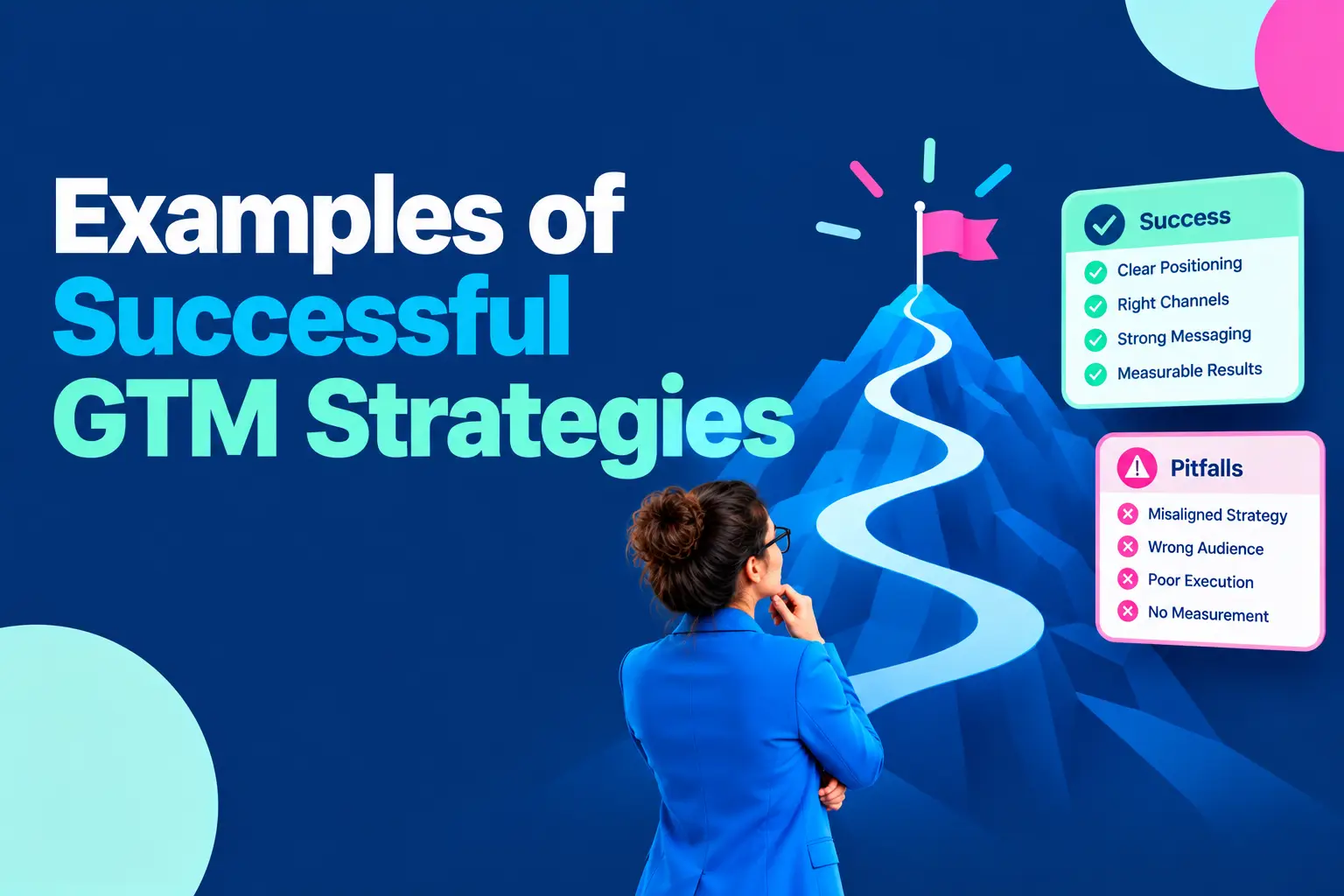
These examples represent different GTM approaches, not a single formula. Lovable illustrates iterative, product-led distribution. Ramp demonstrates customer value and experimentation. Vanta shows the value of addressing a specific business problem. The appropriate model for another startup will depend on its buyers, product, economics and market.
The Pitfalls That Can Derail a GTM Strategy
Even a well-constructed strategy can fail during execution. The following are particularly common in young technology businesses.
1. Treating Assumptions as Facts: Founders may believe they understand their market because they have spoken to a few potential customers. Marketing must validate those beliefs through structured research and evidence.
2. Targeting Too Broad a Market: Trying to serve every industry and company size usually dilutes messaging, wastes resources and makes it harder to identify repeatable acquisition patterns.
3. Leading with Technology Instead of Customer Value: A sophisticated product is not automatically a compelling proposition. Buyers need to understand why it matters to their business.
4. Expecting Immediate Returns from Every Activity: Some channels capture existing demand; others build future demand. Evaluating every investment against the same short-term revenue target encourages underinvestment in longer-term growth.
5. Confusing Activity with Progress: More content, leads, meetings or website traffic do not necessarily mean more qualified pipeline or revenue.
6. Failing to Align Marketing and Sales: If teams disagree about lead quality, target customers or positioning, the GTM strategy will fragment. Shared definitions, handoff processes and regular reviews are essential.
7. Changing Direction too Frequently: Constantly changing priorities prevents meaningful learning. Strategy should evolve in response to evidence, not every new opinion or disappointing result.
8. Scaling Before Validating: Increasing advertising spend or hiring a large sales team before establishing that the proposition converts and customers retain can amplify losses rather than growth.
9. Ignoring Customer Retention: A GTM strategy that wins customers who quickly churn is not sustainable. Product adoption, customer success and retention must feed back into the strategy.
Lesson:
A GTM strategy is a fundamental part of what a tech startup needs to establish itself as a business. Learning what others have done well and not so well can help avoid common mistakes and provide some guidance when there is little other evidence to support your assumptions.
You may want to read: “What is a GTM Strategy?”