
A New Winter of Discontent Guaranteed for the UK …
The October 2026 Budget, delivered by Chancellor John Healey under Prime Minister Andy Burnham, represents another missed opportunity to put Britain back on a growth path. The UK does not have a shortage of ambitious entrepreneurs, innovative technology companies or people prepared to take financial risks to build successful businesses. What it increasingly lacks is an economic environment that gives those people sufficient confidence to invest, employ, expand and commit their capital to Britain for the long term.
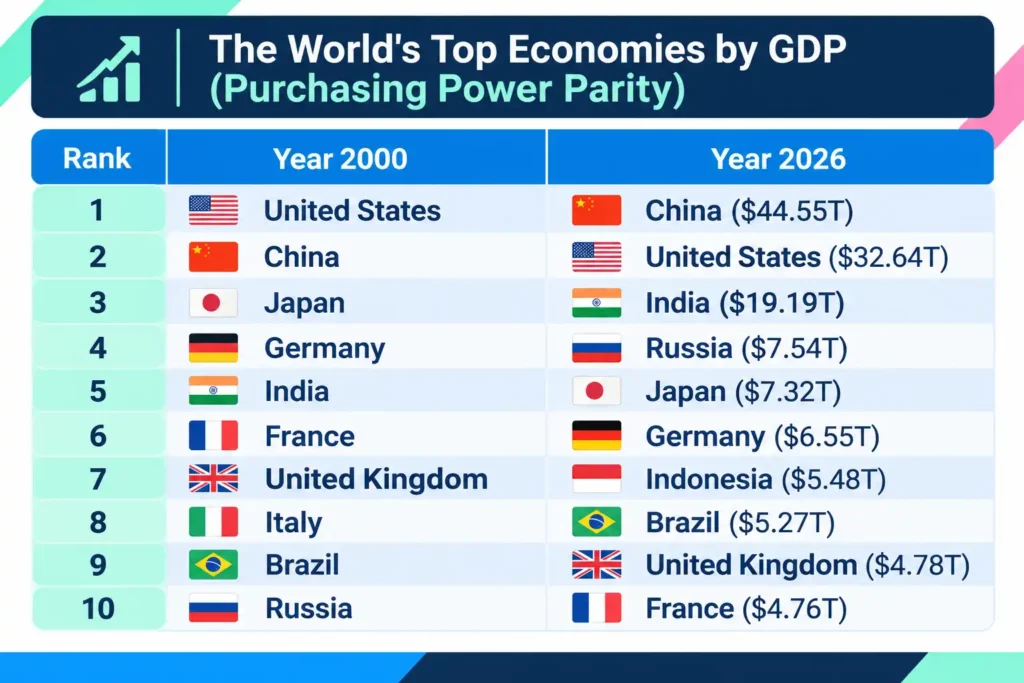
Burnham’s first budget is a disaster, offering little of material value to reverse the current economic decline of the UK economy. Deindustrialisation has been brutal, but the conditions for success that nurtured a finance and services revolution no longer exist, leaving the UK sliding down the table of the world’s top economies and heading for IMF bailouts (see table below). There wasn’t even the slightest attempt to balance the books, with the only recognisable objective being to continue Starmer’s good work of creating economic turmoil and financial collapse. Well done Andy, Manchester must be so proud.
Healey on Helium
Healey and Burnham have done nothing to change the UK’s sliding fortunes. They could have set out a convincing plan to restore business confidence, tackle the UK’s stubbornly high energy costs, stimulate private investment and make Britain a more attractive place to build and scale a company. Instead, the Budget offers a mixture of token targeted interventions, tax adjustments and long-term promises, while leaving some of the most important structural problems unresolved. This is evidence that Burnham is a man without a plan and is already living on borrowed time.
Top 10 Budget Highlights
Below are the top 10 Budget highlights UK startups, investors and business owners need to know, with each given a Burnham pass or fail.
1. Weak Growth Outlook
The OBR forecasts UK economic growth slowing to just 1.0% in 2027, raising further questions about Britain’s ability to generate sustainable prosperity – FAIL.
2. No Major Reset of Business Taxation
Despite growing concerns about the biggest tax burden in UK history, the Budget offers no fundamental change in direction to make the UK significantly more attractive for entrepreneurs and investors – FAIL.
3. Another Squeeze on Private Wealth
Higher taxes on savings and property income from April 2027 will further affect returns for investors, savers and landlords – FAIL.
4. Limited Incentives For Startup Founders
A new 10% Capital Gains Tax rate for qualifying founders is welcome, but it does little to address the wider challenges of funding, launching and scaling a technology business – FAIL.
5. Business Investment Remains Under Pressure
The OBR forecasts business investment falling by 0.5% in 2027, hardly an encouraging signal for companies considering expansion – FAIL.
6. No Comprehensive Solution to High Energy Costs
Targeted support for energy-intensive industries is barely a start, as the UK still faces a significant energy-cost disadvantage compared with the entire world – FAIL.
7. More Questions About Access to Capital
The Budget provides additional public investment but does not establish a sufficiently compelling framework to unlock much greater private-sector investment in startups and scaleups – FAIL.
8. Landlords and Property Investors Face Further Pressure
Higher property-income tax rates and additional property-related measures risk making investment less attractive, with potential consequences for the rental market – FAIL.
9. National Resilience Remains a Concern
Energy security, food security, domestic production and supply-chain resilience require more than short-term interventions and political promises – FAIL.
10. Another Missed Opportunity for Growth
The Budget contains token gestures in the form of initiatives but fails to deliver the scale of reform needed to restore business confidence, reward wealth creation and make Britain a compelling place to build the next generation of successful technology companies – MASSIVE FAIL.
Despite a couple of welcome token measures, the outlook remains bleak. In the context of the overall economic flatline projected for the UK, the bigger question is whether this budget changes the financial calculations facing the people who create wealth. For technology startups, investors, business owners and the wider private sector, the answer is a resounding no. The situation is so precarious that Burnham’s first economic failure could already be his last.
A Budget with No Growth Strategy
The Government talks about growth, innovation and opportunity, but the economic forecasts suggest that Britain is still struggling to generate meaningful momentum. The Office for Budget Responsibility (OBR) forecasts GDP growth of 1.2% in 2026, slowing to just 1.0% in 2027. Business investment is forecast to fall by 0.5% in 2027. These are hardly the figures associated with an economy preparing for a sustained period of entrepreneurial expansion.
The difference between economic activity and economic progress is an important point. A government can announce investment programmes, establish new funds and publish industrial strategies, but none of these automatically creates a more productive, competitive economy. Ultimately, businesses must be willing to invest their own money, employ people, develop products, enter new markets and take commercial risks.
All of that requires confidence. It also requires a tax system that rewards success, regulation that enables rather than obstructs, access to capital and an energy market that does not place British businesses at a competitive disadvantage. This Budget does not provide a sufficiently compelling answer to those requirements. Although balancing the books and creating the conditions for prosperity are not the same thing, this budget falls between both those imperatives, addressing neither and delivering nothing of tangible benefit to a growth-starved nation.
The Tax Burden and Continued Attack on Private Wealth
One of the biggest problems facing the UK is the cumulative effect of taxation. Business owners and investors do not make decisions about individual tax announcements in isolation. They consider the total burden of running a company, employing people, taking profits, investing capital and eventually realising the value they have created. The previous period under Rachel Reeves had already damaged confidence among sections of the business community. Changes to employer National Insurance, business costs and the wider tax environment reinforced concerns that the private sector was increasingly being treated as a cash cow – a convenient source of additional Treasury revenue.
The latest Budget does not change that perception. If Burnham had an ounce of sympathy for the failing conditions of the UK economy, he would have reversed every single one of the Reeves Raids on private, national and sovereign wealth. Instead, Burnham has just made matters progressively worse, much like every Budget before this one for the last quarter of a century. There are no increases to the headline rates of income tax, National Insurance or VAT, and the Chancellor has presented the package as avoiding broad-based tax rises. However, there are increases in the tax rates applying to savings and property income from April 2027. Basic, higher and additional rates will become 24%, 44% and 49% respectively.
For landlords, this represents another deterioration in the tax treatment of property income. For people relying on savings income, it further reduces the return on capital. These decisions may raise revenue, but they also influence where people hold their assets, how they invest and whether they consider alternative jurisdictions. The Government must not assume that private wealth is immovable or that successful entrepreneurs will continue to reinvest in Britain regardless of the conditions placed upon them. Capital is mobile. Founders can establish businesses elsewhere, investors can deploy money internationally and talented individuals can choose to build their careers in countries offering more attractive opportunities. The UK needs to compete for these people, not simply expect their loyalty.
Startups Need More Than Token Gestures
For technology startups, the most important question is whether the Budget makes it easier to finance innovation and scale successful businesses. Startups are particularly exposed to changes in the cost of capital. Unlike established companies, they often operate without significant cash reserves, predictable revenues or access to conventional bank finance. They depend on founders’ capital, angel investors, venture capital, specialist lenders and increasingly complex funding arrangements.
The British Business Bank’s Small Business Equity Tracker reported that UK smaller-business equity investment fell by 4% in 2025 to £12.3 billion. Investment in artificial intelligence companies accounted for a record 44% of the market, while the ten largest fundraising deals represented almost a quarter of total investment. This concentration is important. It suggests that capital is not necessarily reaching the broad range of ambitious businesses that need it to develop and grow.
The Budget does introduce a new Founders’ Relief, offering qualifying founders a 10% Capital Gains Tax rate on up to £10 million of lifetime gains from April 2027. There are also improvements to Enterprise Management Incentives and changes intended to simplify research and development tax relief administration. These are welcome, if token gestures. Rewarding founders who take risks and allowing young companies to attract talent through share ownership are sensible policies, but on their own do not move the dial in any meaningful way.
Token gestures are not a substitute for a comprehensive investment strategy. A founder’s eventual tax treatment is only one part of the decision to start and scale a company. Businesses also need access to funding at seed, Series A and later growth stages, predictable operating costs, customers willing to buy innovative products and a credible route to international expansion.
Much like any growing economy, the need for cheap and abundant energy is a primary factor. This is especially true for today’s AI data centres, with their voracious appetite for power and clean water. The Government needs to make the UK an attractive place to invest throughout the life of a business, not simply offer a more favourable tax outcome when a successful founder eventually sells their shares. Neither Burnham nor Healey appears to understand this simple fact.
Energy Costs Remain a Competitive Disadvantage
Every consumer and business in the UK must be concerned about the state of the energy sector. This is the single most significant structural problem facing the economy. It affects manufacturing, data centres, technology infrastructure, logistics, offices and the cost of almost every service delivered by the private sector. The UK has the most expensive industrial and domestic electricity in the world. For a technology startup operating a data-intensive platform, a business developing hardware or a manufacturer building innovative products, these costs are critical. They affect operating margins, pricing, investment decisions and the attractiveness of locating operations in Britain.
The Budget attempts to offer some assistance, but the Government remains pathetically incapable of extricating itself from the grip of Net Zero madness – the policies which are responsible for the dire situation. Healey confirmed the British Industrial Competitiveness Scheme, which is intended to reduce electricity costs by up to 25% for more than 10,000 energy-intensive businesses from April 2027. It also extends the temporary zero-rate VAT treatment on qualifying domestic electricity and provides further household energy support. This is too little, too late and does nothing to address the real issues.
The underlying problem remains: British businesses need a reliable, cheap and internationally competitive energy supply. Targeted relief for selected industries does not resolve the wider cost disadvantage experienced by the economy. Energy security is economic security – even Liz Truss understood that. Without a competitive energy system, the Government will struggle to attract the industrial investment, technology infrastructure and high-value manufacturing that Britain needs. The Labour Government, regardless of who resides at Number 10, has demonstrably no regard for any of those things.
Lessons From the Past That Britain Must Not Ignore
Comparisons with the Winter of Discontent are inevitable and worthy of consideration. The winter of 1978–79 was a period of economic frustration, industrial disputes, rising prices and deteriorating public confidence. Labour’s attempt to restrain pay increases through a 5% incomes policy contributed to a confrontation with trade unions. Strikes disrupted transport, healthcare, waste collection and the movement of goods, including food and fuel. Britain was not simply experiencing a difficult winter. It was confronting the consequences of deeper economic weaknesses, industrial conflict and a loss of confidence in the Government’s ability to manage the country.
Today’s circumstances are different, but the sentiment is the same. The UK is not facing the same level of industrial action, inflationary conditions or trade union confrontation – just yet. In part this is because the process of deindustrialisation of the last 40 years means we no longer have heavy industries. You can thank Net Zero and the cost of energy for accelerating that process in recent years. Nevertheless, there are uncomfortable similarities in the wider economic mood: pressure on household finances, concerns about public services, expensive energy, weak productivity and frustration with political leadership.
The lesson from the late 1970s is that economic problems cannot be managed indefinitely through political messaging, short-term intervention and attempts to redistribute the consequences of weak growth. Labour is more concerned about wealth distribution than wealth creation and thinks it can tax its way out of structural problems. Eventually, the country needs a credible plan to improve productivity, competitiveness and the capacity to generate wealth. Labour continually proves incapable of creating such a plan.
Britain should be particularly concerned about its resilience. According to Defra’s latest Food Statistics Pocketbook, 58% of domestic food consumption in 2025 came from UK production, with the remainder supplied through imports. This does not mean the UK is facing an immediate food shortage, but it illustrates the importance of maintaining domestic productive capacity and diversified supply chains. Energy, food and financial resilience are not separate political issues. They are fundamental components of national economic security.
Council Tax, Landlords and the Pressure on Households
The financial pressure on households also deserves attention. Rising housing costs, energy bills and taxation all affect disposable income, and ultimately the money available to spend in the wider economy. The Budget introduces a £100 Household Energy Payment for eligible households in England in council tax bands A to D from January 2027 – while annual energy bills are expected to increase by £400 per household in the same year.
The Budget also introduces changes to the taxation of property income and confirms further details of the High Value Council Tax Surcharge. It’s important to distinguish these measures from council tax increases themselves: the Budget does not impose a general council tax rise. Council tax levels are determined locally, even though they are collected centrally. However, households already facing higher bills and local taxation will understandably question how much more pressure they can absorb.
Landlords are also facing a changing tax environment. Higher property-income tax rates risk making some investments less attractive, particularly when combined with financing costs, maintenance, regulation and the responsibilities of providing rental accommodation. There is a wider economic consequence. When investors decide that the returns no longer justify the risk, they may withdraw capital or redirect it elsewhere. The Government must be careful not to confuse making an activity less attractive with making the underlying problem disappear. Once again, Labour has shown they want to reward property investors and risk takers by removing more of their personal wealth.
It’s the System Stupid
A successful economy depends on businesses taking risks and making decisions about uncertain future returns. That is particularly true of technology startups, where substantial investment may be required long before a product becomes commercially successful. Politicians and civil servants often talk about investment as though it can simply be directed into the right sectors through announcements and funding allocations. In reality, private investment follows opportunity. Investors look for credible management teams, market demand, defensible technology, scalable business models and a realistic prospect of generating returns.
A Treasury that focuses solely on raising tax revenue risks overlooking the needs of the people and the organisations it taxes, but it doesn’t seem to care one iota about the harm it is doing. That is the problem when the country is governed by a bloated and bureaucratic Civil Service, run by ideologues with blue hair but no knowledge of business or the economy. The fundamental issue is that Civil Servants can’t be removed from their post by the Ministers tasked with running those government departments. This is a recipe for disaster, and disaster is where the UK is headed if these dimwits, who only serve themselves, are allowed to continue in situ.
The temporary increase in the banking corporation tax surcharge from 3% to 6% is a case in point. It’s intended to help fund household energy support, but banks are important providers of credit and finance to the wider economy. The Government must consider the potential consequences for lending, investment and the availability of finance, rather than assuming additional taxation has no wider commercial impact. The banks will now penalise consumers and businesses alike by tightening the credit available to them, effectively strangling the economy from its financial lifeline.
Equally, the UK needs to address the cost and complexity of regulation and public administration. Businesses frequently encounter overlapping requirements, slow decisions and administrative processes that consume time and money. Civil Service accountability is non-existent, much like their efficiency. All this needs to be on the table for an honest debate about growth. Public administration exists to deliver effective government, not to become an additional obstacle for those trying to build businesses and create jobs. It’s far beyond time to set this right. This Civil Service debacle was initiated under Tony Blair, one of the many disasters we must thank him for, but all of which must be reversed if the UK is ever to attempt to climb itself out of the economic doldrums.
No Backing for Britain’s Wealth Creators
The Government will point to its invisible industrial strategy, the additional capital for the National Wealth Fund, funding for innovation clusters and targeted support for entrepreneurs as evidence that it is backing growth. There is no real substance behind any of these initiatives. The Budget includes £15.4 billion of additional capital for the National Wealth Fund and £1 billion of UK Research and Innovation investment directed towards priority innovation clusters. These are welcome token commitments but do nothing to ensure the conditions for business and economic growth.
Public investment cannot replace a competitive private-sector environment. Nor can a collection of funding programmes compensate for weak productivity, high operating costs, uncertainty over taxation and insufficient access to growth capital. The UK needs a more ambitious approach: a stable and competitive tax regime, stronger incentives for private investment, cheap abundant energy, simpler regulation, better access to finance and a genuine commitment to rewarding entrepreneurial success.
For technology startups, this means supporting businesses from the earliest stages through to international scale. It means making it easier to recruit talent, fund research, commercialise intellectual property and retain the value created by British innovation. It also means recognising that successful founders and investors are not simply sources of tax revenue. They are essential contributors to the country’s future prosperity.
The UK Cannot Tax Its Way to Prosperity
The greatest weakness of this Budget is not necessarily any single announcement but the overall lack of any meaningful plan or cohesive strategy. It’s the absence of a sufficiently convincing sense of urgency about the scale of the UK’s economic challenges that is most concerning. Just kicking the can down the road and promising to deal with it later is negligent and demonstrates the vacuous nature of Burnham and his entire cabinet. The country has never been blessed with such a dangerous kakistocracy as the current administration.
The comparison with the 1970s should be a warning to everyone. Britain does not need another period of economic stagnation, industrial confrontation and declining confidence before it recognises that its approach is failing – although it may already be too late. The country needs political leadership that understands wealth creation, values private enterprise and recognises that the government cannot prosper without a successful economy underneath it.
For all the talk about opportunity, this Budget leaves too many of the fundamental questions unanswered. It dances around the edges by offering selective reliefs and investment announcements but does not address any of the core structural issues. The net result is a complete lack of transformation of the conditions facing the people who create jobs, develop technology and invest their own capital. For the UK’s founders, investors and business owners, the message is therefore deeply disappointing: Britain still wants the benefits of entrepreneurial success but has yet to demonstrate convincingly that it understands what is required to encourage it. As budgets go, this one has little to welcome or be hopeful about.
Lesson:
The October 2026 Budget is another disastrous missed opportunity – and one that Britain can ill afford. Starmer was like a rabbit in the headlights, frozen by fear. Burnham, on the other hand, seems to be the affable but clueless clown, with barely a GCSE-level understanding of the economy, business or the people working hard to create growth, success and wealth for all. Burnham has proved himself to be dangerously inept with this Budget. This doesn’t bode well for the next one.
You may want to read: “What is a GTM Strategy?”