Startups Grow Faster with Experience …
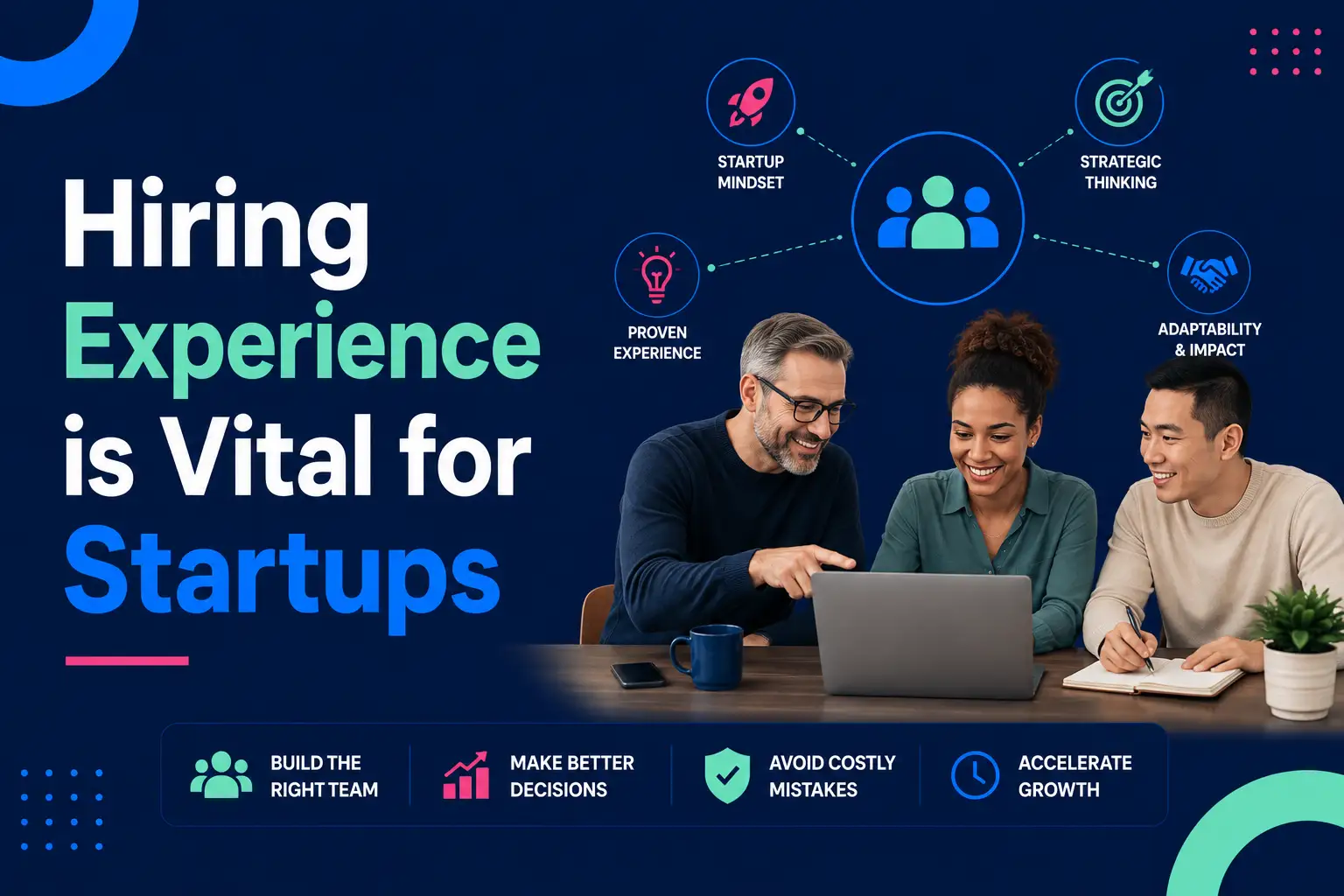
Experienced leadership can make such a difference to early-stage businesses that it must be a hiring priority. The right person brings functional expertise and lessons learned from previous successes and failures. They know what good looks like and they know where the traps are. Knowing which problems are genuinely important and which are distractions allows you to push at the right time and know when to stop. If you have never experienced uncertainty and ambiguity before, then you may struggle in startup culture. Experience can dramatically reduce the number of mistakes a startup needs to make, putting you on a fast track to success.
Founders Must Take the Benefits of Experience Seriously
CB Insights’ latest analysis of 431 VC-backed companies that shut down since 2023 found that 23% cited team problems as a failure factor, while poor product-market fit was cited in 43% of cases. Capital running out was the final cause of failure for 70%, but the research argues that this was often the consequence rather than the underlying problem. The lesson isn’t that experienced people guarantee success. They don’t. It is the team’s quality that can materially influence the quality of the decisions that precede success or failure.
Build a Culture That Accepts Being Wrong
A company that never gets anything wrong is probably not taking enough risks to discover anything new. Perhaps the healthiest startup culture is not one that expects every decision to be right, but one that expects people to make the best decision possible with the information available at the time. That distinction is important. If people believe they will be punished whenever an experiment doesn’t work, they will become conservative and less creative, killing all opportunity for innovation. You do not want a team of people who avoid difficult decisions, because they are more interested in protecting themselves rather than the company.
The result can be a culture where everyone waits for someone else to take responsibility. Instead, founders must create an environment where people say: “We made the best decision we could. It didn’t work. Here’s what we learned.” That is not failure; it is organisational learning. Of course, there must be accountability. Repeatedly making poor decisions, ignoring evidence or refusing to learn is not acceptable. Ultimately, your people must not live in fear of making mistakes because those mistakes are important lessons. Remember, failing to make a decision is worse than standing still, because the world continues to move forward while you flounder.
The Startup Environment Isn’t for Everyone
A startup environment can be the most stimulating, motivating and exhilarating, at least for some. There is an enormous sense of cohesion, unity and possibility. You can see the impact of your decisions almost immediately. You can build something from nothing and change direction. It’s possible to experiment, challenge established thinking and create a market rather than compete within one. However, this dynamic, chaotic and volatile environment can be a rollercoaster ride, so it isn’t for everyone.
Some people thrive on structure, predictability and clearly defined processes. Startups often provide very little of these things. If you need every decision to be supported by five years of historical data before you feel comfortable, early-stage entrepreneurship is likely to be uncomfortable. The startup CEO needs people who can operate effectively in ambiguity without becoming reckless.
They need people who can say:
- “We don’t know.”
Followed immediately by:
- “But here’s what I think we should do, here’s why and here’s how we’ll know whether we’re right.”
That is an incredibly valuable skill.
Put Your Big Pants on and Make the Call
There comes a point when analysis has done everything it can, and it’s now up to you to decide. The debate has finished, the risks are understood and the available evidence has been considered. However, after the alternatives have been examined and the leadership team has challenged the assumptions, there is still no definitive answer. That’s startup life. At this point, somebody must decide, and there is no backing out of it or deferring the outcome until after another meeting with the same information being discussed.
Go For It
This is not a license to be reckless; it means accepting that perfect information isn’t coming anytime soon. Time won’t wait, competitors won’t wait, customers won’t wait and investors certainly won’t wait. Marketers are always at the coalface of any startup and must push forward regardless of the ambiguity. The thick fog in front of you may mean you have nothing to navigate apart from the next single reflective cat’s eye in the middle of the road, but you are still moving forward. The startup that waits for certainty may discover that certainty only arrived after the opportunity disappeared.
Don’t Blink
Early-stage startups are businesses in the process of becoming informed. They don’t begin with the knowledge they eventually need; they create it. Every customer conversation, product release, campaign, sales meeting, hiring decision, pricing experiment, lead-gen campaign and market entry creates another piece of organisational knowledge. The objective is therefore not to eliminate uncertainty, but to make good decisions despite uncertainty and learn quickly from the consequences. That requires strong founders, experienced leaders, healthy debate and a culture that accepts that some decisions will inevitably be wrong. It also requires discipline. “Trust your gut” cannot be an excuse for ignoring evidence, and speed cannot become an excuse for poor judgement.
Importantly, ambition cannot be an excuse for abandoning the company’s strategy. The best startup leadership teams combine experience, judgement, evidence, debate and decisiveness. They know when they need more information, when they have enough information and when there is no more information coming-somebody has to make the call. The only way a startup builds the experience and data it needs for tomorrow is by making decisions today.
Time waits for no startup. Sometimes you have to make the best call you can, learn fast and go for it.
You may want to read: “How Early-Stage Startups Make Decisions.”