Market to Humans to Sell to Companies …
The relevant personas within your target companies are the individuals with whom you will need to communicate, form relationships, build trust and convince that your solution is right for them. B2B tech startups may be selling IT solutions to companies, but your buyers are people working in those businesses. Just like in consumer markets, you are selling to humans, even though they are operating in their professional capacity and on behalf of their employer. This means you must appeal to their emotions and desires while steering them away from any unhelpful preconceptions with information and educational content. Many of the same psychological drivers apply when making a sale to consumers or business clients, such as brand image, aspiration, ambition and personal status.
Who Are Your Buyers?
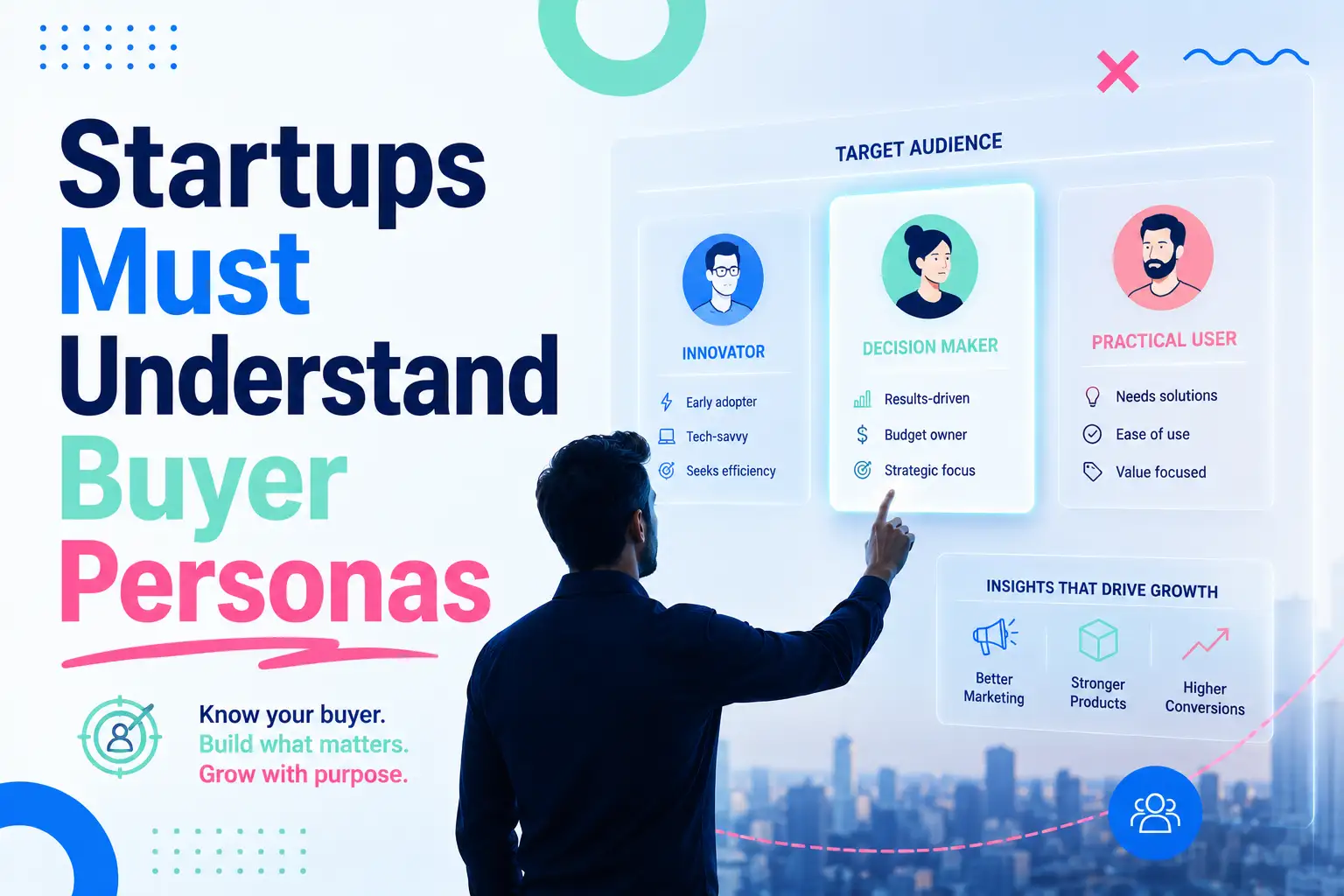
When launching your B2B tech startup, the hardest thing you will ever have to do is sell your solution to other organisations. This is why you must establish the individuals you need to market and sell to in the businesses you are targeting. Depending on the specific circumstances of your target market, the people you market and sell to may not be identical. For example, if you are selling large tech solutions to large enterprises with big buying teams, you may select a subset of this team to target with your marketing campaigns. In some instances, they will be the same people. In any case, this is a key requirement to know who is likely to be involved in the buying process and at what stage, from beginning to end.
ICP + Job Roles = Target Audience
The buying team is made up of individual personas, identified by specific job roles and responsibilities. Identifying them is key when establishing your Ideal Customer Profile (ICP). The ICP defines the criteria for the type of organisations you want to sell your solution to, and this is your target group of prospective companies. By adding the personas, you build up a picture and dataset of exactly who you need to market to and how to personalise the messaging based on their professional profile. The output of this work is your target audience, meaning you can work efficiently and effectively to communicate with the precise people you must engage with.
Why Buyer Personas Are So Important
B2B tech startups without a clearly defined ICP are unlikely to achieve sustained success. Equally, doing this work without understanding who within the target companies you must speak with to win a sales deal is going to severely limit your progress. Buying teams within a business range on average from 1-12 people, depending on how big the target company is, the complexity of the solution you are selling and the price. Not only must you identify the individual buyers, but you must also get to know them personally. Only by understanding your target personas can you hope to engage them in meaningful ways. This makes any sales process a sophisticated dance of minds and their resolve, underscored by detailed negotiations.
Transactional Product or Solution Sell?
If you have a low-priced product with one decision-maker or budget holder who can sign-off the purchase, then you may only ever have one target persona for both marketing and sales. This streamlines the process, making it relatively straight forward to get a decision and conduct a low value transactional sale. If your sales price represents a significant investment, say for a complex ERP solution, you may have to initially market to specific personas who will champion your cause internally before engaging with a wider buying team. Normally, they will collectively assess and analyse a shortlist of vendors before selecting a winner. Each of them may have their own individual agenda and point of view, different from their colleagues. You must understand, navigate and manage all the personalities, their complexities and nuances to win each new customer. This is why enterprise selling is a cherished and sought-after skill set, with high risk and reward.
Who is Your Champion
You can define the individual personas of a buying team by conducting your own research to identify the key decision-makers and influencers relevant to your tech solution. Start by mapping out the organisational structure to pinpoint individual roles and their responsibilities. The first, and one of the most important personas, is the champion. This is the person or people most pertinent to your solution being sanctioned for use in a company and who will introduce you to the wider buying team, as well as support you through the sales process. In short, they are to be regarded as your biggest potential advocate and beneficiary. You will need to focus much of your initial marketing and messaging on this individual. It’s important to become very familiar with this persona and understand what makes them tick.
Define Your Buying Team
The wider buying team consists of individuals you can group into the following categories, each of which can represent one person or multiple people depending on each target company.
The 10 Buyer Personas:
1. The Economic Buyer
Usually: CEO, Founder, Managing Director, CFO
Primary concern: Business outcomes and ROI
They are often the person who approves the budget and makes the final purchasing decision.
Questions they ask:
- Will this increase revenue?
- Will it reduce costs?
- What’s the ROI?
- What is the risk of doing nothing?
Messaging:
- Growth
- Profitability
- Efficiency
- Competitive advantage
2. The Decision Maker
Usually: Department Head, VP, Director
Primary concern: Achieving departmental objectives
This person often owns the project and is responsible for selecting vendors.
Questions they ask:
- Will this solve our problem?
- Is implementation realistic?
- Can my team adopt it?
Messaging:
- Outcomes
- Performance improvements
- Ease of implementation
3. The Technical Buyer
Usually: CIO, CTO, IT Director, Security Manager
Primary concern: Technical fit and risk
Particularly important for software, SaaS and cybersecurity solutions.
Questions they ask:
- Does it integrate?
- Is it secure?
- Is it scalable?
- Does it meet compliance requirements?
Messaging:
- Security
- Reliability
- Architecture
- Compliance
4. The User Buyer
Usually: Team members who will use the solution daily
Primary concern: Usability
They often influence the decision even if they don’t control the budget.
Questions they ask:
- Is it easy to use?
- Will it make my job easier?
- How much training is required?
Messaging:
- Simplicity
- Productivity
- User experience
5. The Champion
Usually: An enthusiastic internal advocate
Primary concern: Driving change
This person actively promotes your solution internally.
Questions they ask:
- How do I sell this internally?
- What evidence can I present?
Messaging:
- Success stories
- Business cases
- Customer references
6. The Financial Buyer
Usually: CFO, Finance Director, Procurement
Primary concern: Cost and commercial risk
Questions they ask:
- What are the costs?
- What are the contract terms?
- Are there hidden fees?
Messaging:
- Total Cost of Ownership
- ROI
- Payback period
7. The Procurement Buyer
Usually: Procurement Manager
Primary concern: Vendor management and compliance
Questions they ask:
- Have suppliers been vetted?
- Are terms acceptable?
- Is the process compliant?
Messaging:
- Risk reduction
- Governance
- Supplier stability
8. The Security Buyer
Usually: CISO, Security Manager
Increasingly important in B2B tech.
Questions they ask:
- How is data protected?
- What certifications do you hold?
- How quickly can threats be detected?
Messaging:
- Security
- Compliance
- Resilience
9. The Operational Buyer
Usually: Operations Director, Service Manager
Primary concern: Efficiency and process improvement
Questions they ask:
- Can we automate this?
- Will it reduce manual effort?
- Will it improve service delivery?
Messaging:
- Productivity
- Automation
- Operational excellence
10. The Innovator
Usually: Digital Transformation Lead, Innovation Manager
Primary concern: Competitive advantage
Questions they ask:
- Can this create differentiation?
- Will it help us innovate faster?
Messaging:
- Innovation
- Growth
- Market leadership
For most B2B tech startups, the five personas that matter most are:
- Economic Buyer
- Decision Maker
- Technical Buyer
- User Buyer
- Champion (most likely one of the above)
If you can identify and tailor messaging to those five stakeholders, you’ll be ahead of most early-stage startups. It will help if you gather insights from your marketing and sales teams, LinkedIn profiles, company websites, the trade press and industry reports to build detailed personas that include job titles, responsibilities, their key challenges and decision-making criteria.
Selecting Your Marketing Group
Once you have defined your buyer personas, you may feel compelled to market to all of them, but this is not always necessary or even practical. Remember, the champion is the one that is key to introducing your solution to the company, so this individual is where you focus a disproportionate amount of your efforts. However, if you are selling a big-ticket solution, I suggest you include all senior decision-makers who will be key in your marketing group. For example, if there are up to five people in your buying team who are mainly C-level decision-makers, you may decide to market to all of them. For buyer groups consisting of up to 12 people or more, it may not be cost-effective to market to all of them. Decide who your champion is and the other key senior decision-makers relevant to winning a sales deal, and that will be your marketing target group. Focus your marketing efforts on them with tailored messaging to address the specific needs and concerns of each one.
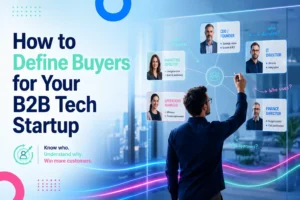
You may want to read: “How to Define Buyers for Your B2B Tech Startup.”