How B2B Tech Startups Decide on Marketing Resources …
Marketing is THE critical component that determines the success of B2B tech startups. Having worked in this field for decades, I have witnessed how marketing helps establish a brand presence, generate leads and drive growth. It would be very hard to scale and grow any business without a dedicated marketing effort, but should your startup use internal or external marketing resources to do this? My answer is that it is not a question of one versus the other because a successful tech business will need both.
Situational Needs and Personal Preferences
Tech founders must determine what the business needs and when they can afford it. Initially, you may start with just one marketing resource, but over time you may use a mix of internal and external resources, considering the different requirements at various stages of your startup’s journey. Knowing how to decide when and how to use each option and what mix is required means focusing on considerations such as timing, budget, capability, specialism, pace of growth and strategic goals. Although a hybrid model is more effective overall, there could be stages in a startup’s development where choices must be made, and one approach may be preferred over the other. Personal preferences and financial restrictions may swing the decision either way.
Commit to Marketing and Commit to Success
Successful tech founders are prepared to commit and invest in marketing to build a brand and grow their business. If you lack the will to commit time and available resources, then it won’t matter who you choose to do your marketing; it will fail because you have failed to support it. Founders do not reserve the right to be disappointed if the results don’t meet unrealistic expectations when investment in marketing lags the stated ambition. If there is such a mismatch, founders must do everything possible to balance it by funding marketing appropriately to invest in growth.
Founders Must Prioritise Marketing
Marketers can achieve small miracles with hard work and creativity when startups are bootstrapped, but this can only last for so long and is not a sustainable long-term strategy. I’ve seen cash-starved startups acquire their first customers, only for the founders to use that revenue to grow headcount unsustainably, instead of putting money into marketing. The same founders then complain when, predictably, the sales pipeline shrinks. Without investment, any early success is unlikely to be consistent, predictable or even repeatable. Your sales team will quickly run out of new opportunities if marketing investment is not forthcoming at each stage of growth.
Deciding Between Internal Marketing vs External Agencies
If hiring a dedicated internal marketing professional is not an option, a good alternative is to use a marketing consultant, supplemented with freelancers or an agency, until you are able to bring someone in on a permanent basis. A full-time marketing employee is a good place to start because they have a full understanding of the business and its culture, something an agency would struggle to do. If your circumstances require broader capabilities without the option of a full-time hire, then an agency may be the next best choice. The important thing is that you are doing something, but I would always prioritise getting someone to work in the business and join the team to run marketing as soon as possible. There will always be examples of successful businesses that approach marketing differently, but if you don’t invest in and develop an internal marketing function, you’re at a significant disadvantage.
Each Approach has Its Benefits and Challenges
Founders must assess their individual situation and review the options on their merits before deciding.
Internal Marketing:
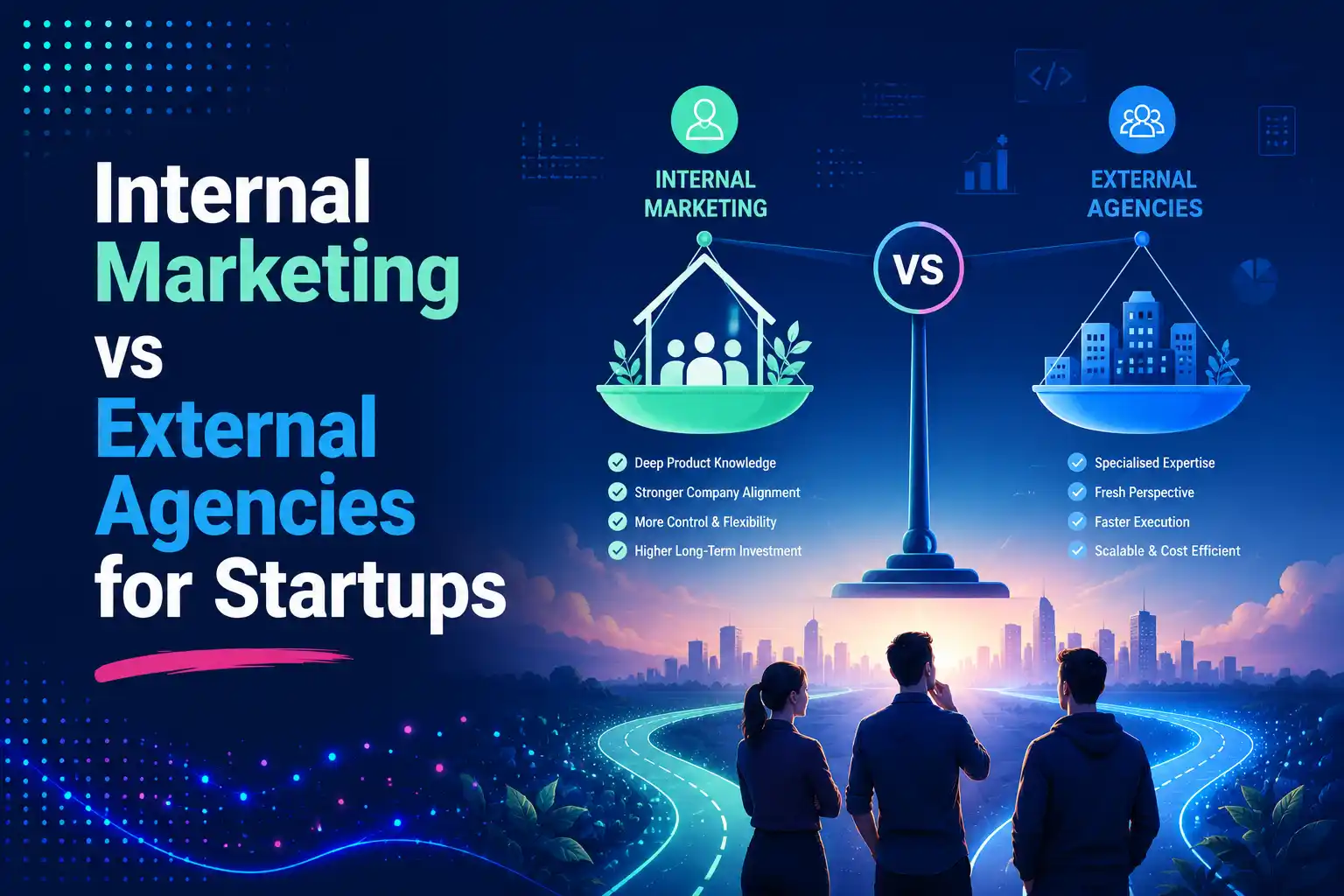
A dedicated internal marketing resource is very cost-effective, as it gives you greater control over your brand and messaging, allowing quick adjustments to planning and execution. However, you will need someone with enough experience to know what to do and how to do it with limited assistance, but you must give them your full support. They must be empowered to ask questions and challenge founders who make knee-jerk decisions or irrational requests that have not been well thought through. A dedicated employee will be more aligned with your company vision and core values. An internal marketing function will grow and develop over time, adding new capabilities and specialised skills when appropriate.
External Agencies:
Marketing agencies usually have access to a broad range of skills and can provide a fresh perspective. As they serve many clients, they can suggest new ideas and creativity to boost your campaigns, although this can also be a double-edged sword. I have seen high-profile marketing agencies circulating the same campaign design concepts to different tech companies in the hope that one of them might stick, even though they were not created with any of those clients in mind. What an agency should be doing is investing time to understand a client first, before creating bespoke campaigns that truly reflect their brand and messaging. There are no shortcuts in marketing, so don’t get caught out by cheap tricks.
This is why having a strong internal marketing team is important, because it protects you from the industry’s charlatans, who would take advantage of naïve founders. However, there can be real benefit in working with external agencies if they are briefed and managed appropriately. As a small business, you simply cannot do everything in-house that is required by a modern and dynamic marketing function, but a founder doesn’t have the time or experience to manage third-party providers. Agencies can quickly scale efforts up or down and provide specialist skills you may not have access to internally. They will likely have higher upfront costs and need time to get to know and understand your business before they are fully operational and delivering results.
Don’t Hire for Every Skillset
Even when I have worked as part of a large and dedicated internal marketing team, it has still been helpful to leverage the support of freelancers and external agencies, usually for specific tasks such as press relations, content creation, campaign syndication, telemarketing, market research, design, video production, web development, exhibition stand build and so on. There is a broad list of capabilities that can be accessed externally and on-demand. Usually, those activities may be too irregular, specialist, costly or inefficient to hire as a permanent internal resource.
Determine What is Core to Your Success
As your tech startup grows and more marketing budget becomes available, some of the required skills may be brought in-house if they are considered core activities. This is a good way to determine what marketing tasks are best taken care of internally. It may be better to hire someone to cover core marketing activities, so there is accountability for planning, execution, building processes and reporting. This applies even if external support is necessary to deliver on part of the plan. Once your core marketing activities are established, external resources can be engaged as and when required for specialist, project or non-core activities.
Not All Agencies Are Created Equal
I have always enjoyed working with good marketing agencies and building relationships with them. They often have deep knowledge in specialist fields and follow best practice methods to help keep you on track. However, not all marketing agencies are created equal and for every good agency experience, I have at least twice as many horror stories. It’s important to do your due diligence at the selection stage to ensure you get a good fit, and then you must negotiate easy terms that are not financially punitive if things don’t work out. Never tie your startup to contracts with difficult terms or long notice periods, just in case you need to cancel the agreement should your financial circumstances change. Good marketing agencies will always allow flexible terms and stand on the quality of their work.
Expertise and Flexibility
Internal marketing teams offer deep knowledge of a company’s products, culture, processes and ways of working, while external agencies provide access to diverse skills and fresh perspectives. Agencies work for many clients on a larger scale than most startup marketing teams, providing access to wide industry trends that can inform tactics at a granular level to help improve campaign performance. Both approaches are necessary and valid as part of an efficient and effective marketing function, which is why a hybrid approach works best. Of course, you must assess your growth trajectory and marketing needs when deciding on resource allocation. However, as your business scales, having a flexible approach that combines internal expertise with external support ensures adaptability to changing demands.
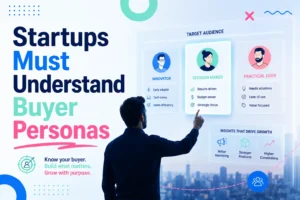
You may want to read: “Startups Must Understand Buyer Personas.”