A Best Practices Sales Methodology …
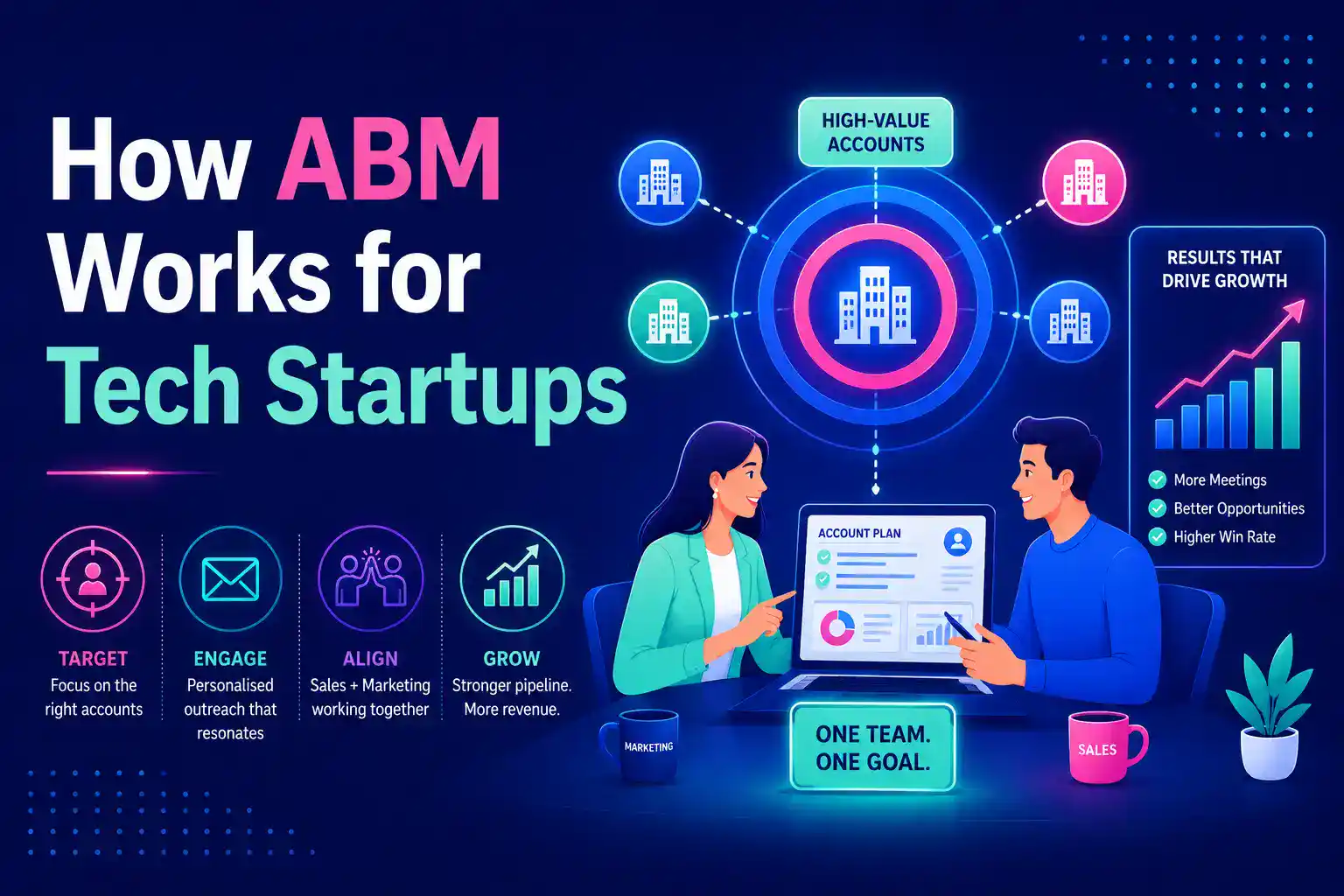
ABM is a strategic approach that aligns marketing and sales efforts to target high-value accounts with personalised campaigns, triggered by specific conditions or events that help make a prospect more likely to buy. While it uses a wide variety of sales enablement and dedicated ABM tools, it’s more about the methodology and the alignment between teams around key accounts, rather than the tools themselves. In essence, ABM is a strategic approach that can be supported by various systems and technologies to help scale the practice.
Triggers for Marketing and Sales Outreach
For B2B tech companies using ABM, several key triggers must be defined to prompt a salesperson to reach out to a prospect and create a new sales opportunity. These triggers are typically referred to as ‘buying signals’ that indicate a target company may be ready to engage in a purchasing decision, making it the ideal time for sales teams to initiate direct contact. Each tech company will have to assess its own market and decide on a list of parameters to research that, when triggered, make a target company ready for a sales conversation. The exact same triggers may not necessarily work for all tech solutions, but there are some common ones that are generally seen as helpful in building a picture. Use these signals as a foundation, which can then be supplemented and enriched with other information that may be more specific to your solution and your target market.
Top 10 ABM Sales Prompts:
- Behavioural Data: This involves monitoring the behaviour and online activity of target accounts, such as specific searches, content consumption or interactions with your website, as well as with competitors. When a company shows increased interest in a relevant topic or product category, it’s a strong signal for sales to engage.
- Technographic Data: Information about the technologies a prospect company is currently using can also be a trigger, such as, if a company starts using a complementary technology or is due for a renewal of an existing solution, it might be an opportune moment for sales to pitch a related product.
- Engagement with Marketing Content: When a prospect repeatedly engages with your marketing content, for example, downloading whitepapers, attending webinars or interacting with emails, it signals interest. Sales teams often reach out when there’s a pattern of consistent engagement or when a key piece of content is consumed.
- Website Visits: The same is true for which companies are visiting your website, especially high-value pages like pricing or product demo pages. Monitoring web page activity is important and can be a strong indicator of interest. Many tech companies use tools like IP tracking to identify which target accounts are visiting their website and then initiate sales outreach based on patterns of activity.
- Competitive Moves: If a competitor makes a significant move, such as a new product launch or a major partnership, it may nudge you to take action in a pre-emptive sales approach to your target accounts. This can be especially relevant if a competitor’s move creates a pain point or an opportunity that your solution addresses.
- Business Events: Significant events within a target prospect company, such as mergers, acquisitions, funding rounds or leadership changes, often indicate a shift in strategy or budget, making it a prime time for sales to engage and assess the situation.
- Product Usage or Trials: For tech companies offering trials or freemium products, increased usage or specific behaviours during a trial period can signal readiness for a sales conversation. This might include hitting a usage limit, trying advanced features or inviting additional team members.
- The Swap Out – Renewal or Contract End Dates: For prospects who are currently using a competitor’s product, knowing when their contract or subscription is up for renewal is a critical trigger for reaching out with a competitive offer.
- Social Media Engagement: Interaction on social media platforms, especially LinkedIn, where prospects may like, share or comment on relevant posts, can also be a cue for sales teams to reach out.
- Company Growth Indicators: If a target account shows signs of rapid growth, such as hiring sprees, opening new offices, expanding product lines etc. they might be able to invest in new technologies, prompting a timely sales approach.
These triggers help your salespeople to prioritise when and where they target their efforts, ensuring they reach out to prospects at the most opportune moments, increasing the likelihood of a successful engagement.
Scientific Targeting
ABM has evolved into a scientific discipline, leveraging data analytics, AI and machine learning to precisely target and engage high-value accounts. Focusing on deep personalisation and strategic alignment with key accounts, ABM uses data to inform every step of the process. Marketers now use advanced analysis to identify the most promising accounts, understand their pain points and tailor content that resonates on an individual level. AI tools analyse massive datasets to predict which target companies are most likely to convert, allowing for smarter allocation of marketing resources and more effective campaign execution, along with ideally timed contact from salespeople.
Predictive Success
The integration of predictive analytics and behavioural data has transformed how ABM is practiced. Analysing patterns that demonstrate signals and engagement triggers can help to anticipate the needs and timing of target accounts with remarkable accuracy. This approach has turned ABM into a data-driven endeavour, where success is measured not just by conversions, but by the precision of targeting and the efficiency of engagement. As a result, ABM has become a cornerstone strategy for B2B tech companies looking to drive growth by focusing their efforts on the most important prospect accounts.
You may want to read: “How to Define Your Target Market.”